Appian Way (Via Appia Antica) · Porta San Sebastiano · Rome
Appian Way to experience
The Queen of Roads is free to walk, but it is long and the Roman basalt paving stones are uneven. Here you will find how to experience it on foot, by e-bike or golf cart, and which tours include catacombs and aqueducts.
Update: limited traffic zone on weekends on the Appian Way. From 19 September 2026, a trial limited traffic zone with electronic gates will be in place between Via delle Mura Latine and Via Appia Pignatelli, on Saturdays and Sundays from 7 am to 7 pm, excluding August. How to get there and what changesUpdated: October 2026
Transport and languageWho goes by e-bike, golf cart or minibus, and in which language
Free firstWhat you can do for free before paying for anything
Closures aheadThe catacombs' closing days, one by one
Secure bookingVia GetYourGuide, with a ticket on your phone
Tours
Choose your Appian Way tour
Our top recommendation in the centre: the Appian Way and the Aqueducts by e-bike, with a catacomb or lunch of your choice. On the left, the golf cart from the historic centre with catacomb entry; on the right, the minibus from Piramide.
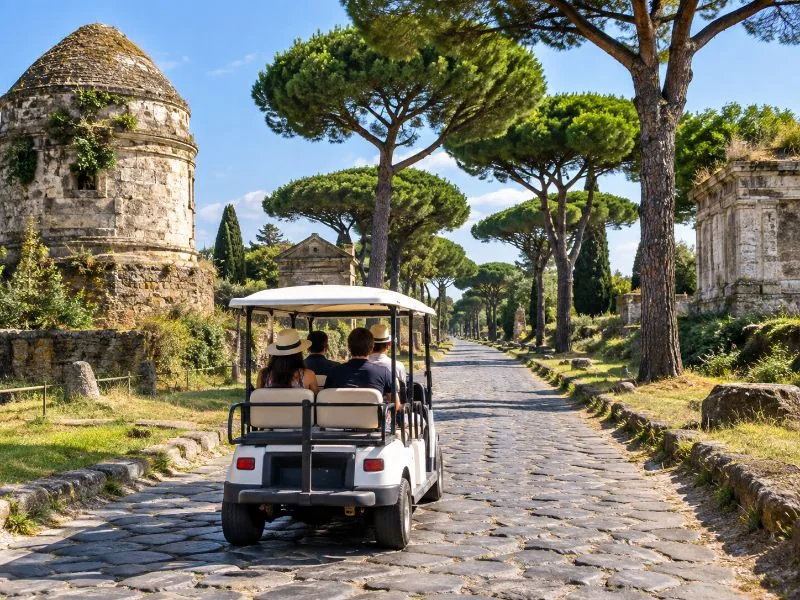
An electric golf cart from the historic centre to the Circus Maximus, the Baths of Caracalla and along the Appian Way, with a walk on the Roman basalt paving stones. Admission and guided tour of a catacomb included.
What's included
Driver and guide on electric golf cart, in English, with headsets
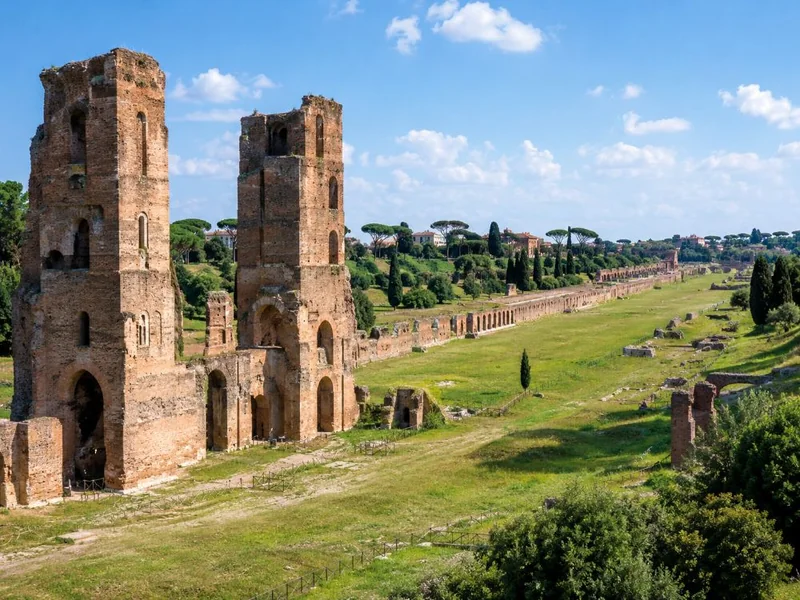
Circus Maximus, Baths of Caracalla, Aurelian Walls and the Appian Way
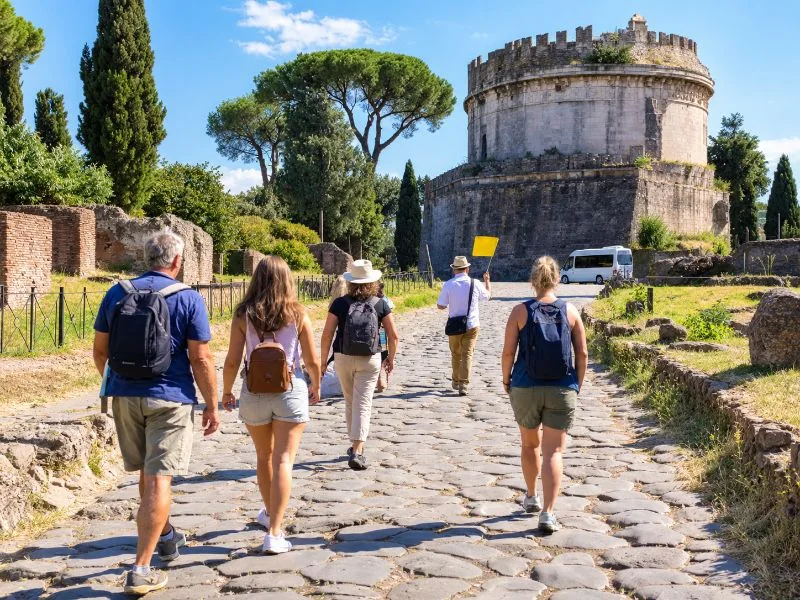
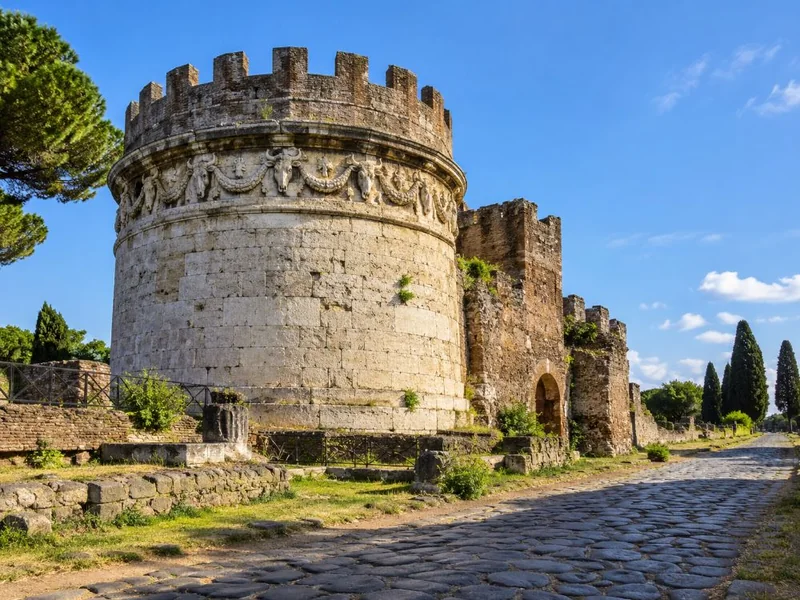
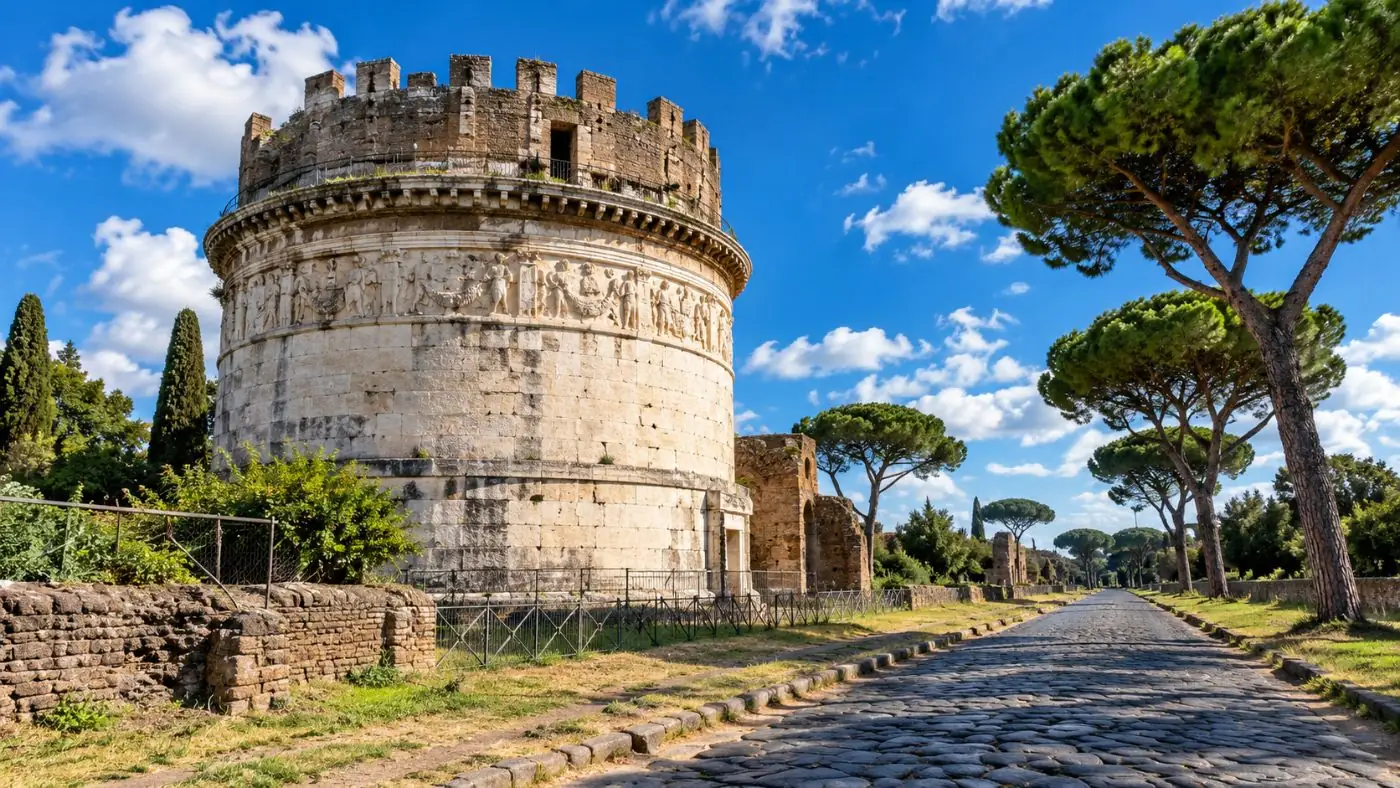
Walk on Roman basalt paving stones at Cecilia Metella’s tomb
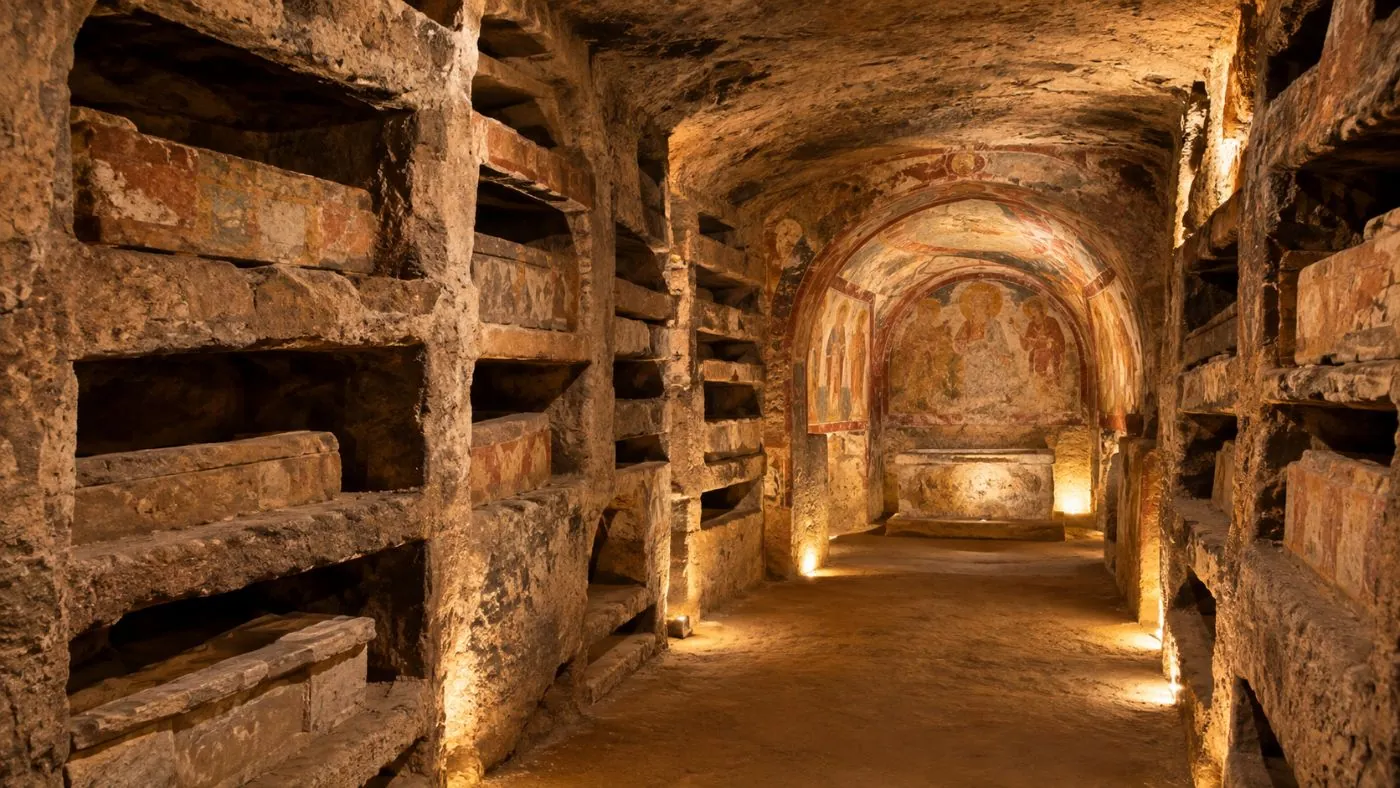
Admission to a catacomb with a guided underground tour of about half an hour
Departure from Via Monterone 19 near Largo Argentina, arrival near the Pantheon; no hotel pick-up
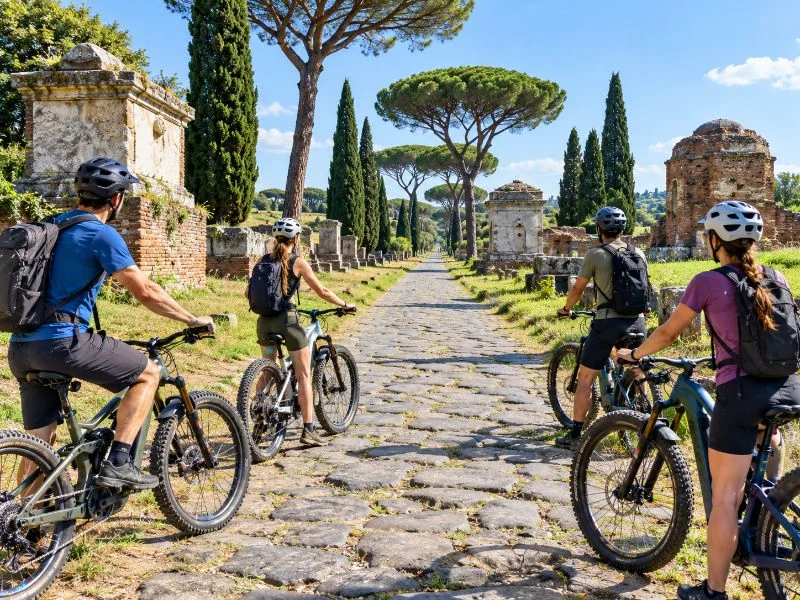
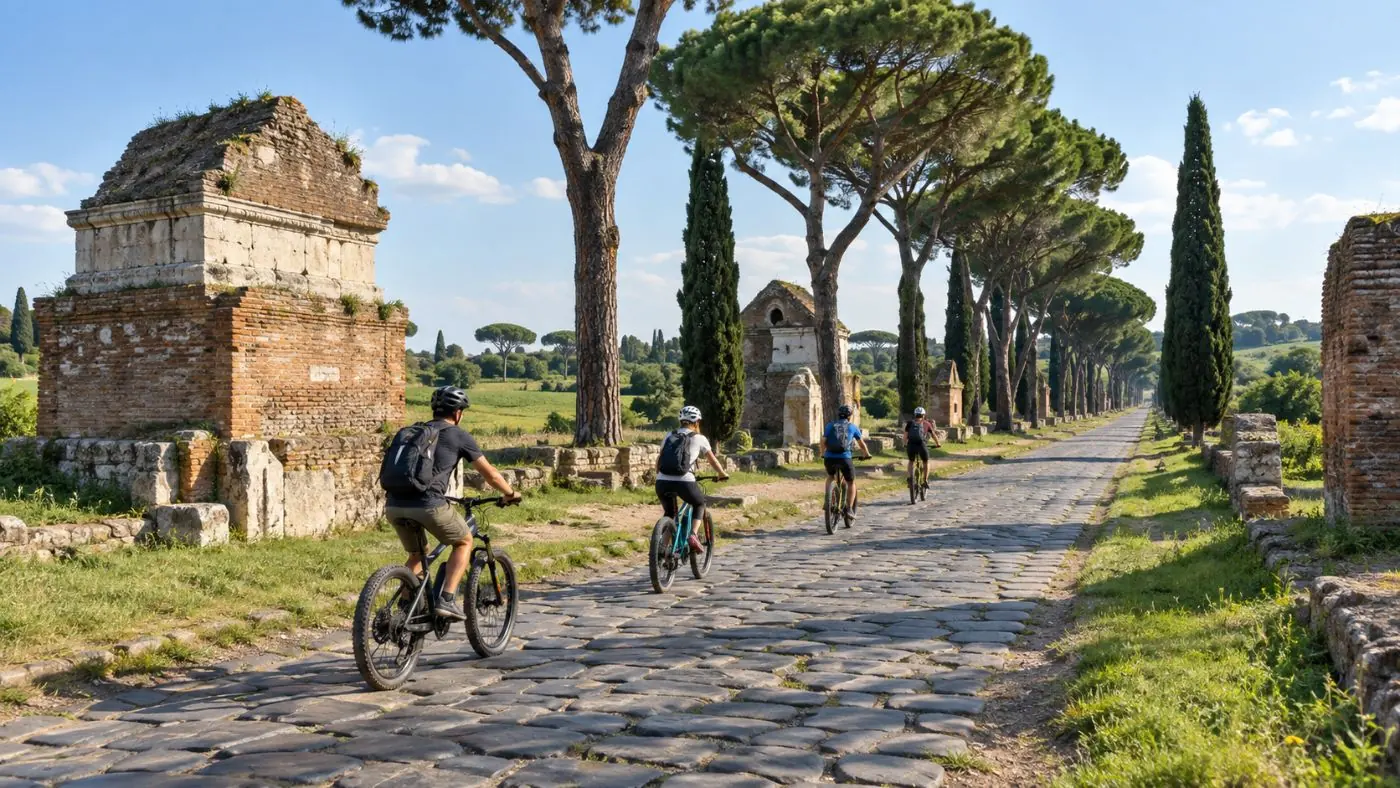
On full-suspension e-bikes along the Roman basalt paving stones of the Appian Way as far as Parco degli Acquedotti. Depending on the offer, you can add a catacomb or a lunch or aperitif.
What's included
Full-suspension electric e-bike, suitable for the uneven surface of the Roman basalt paving stones
Multilingual guide: Italian, English, French or Spanish
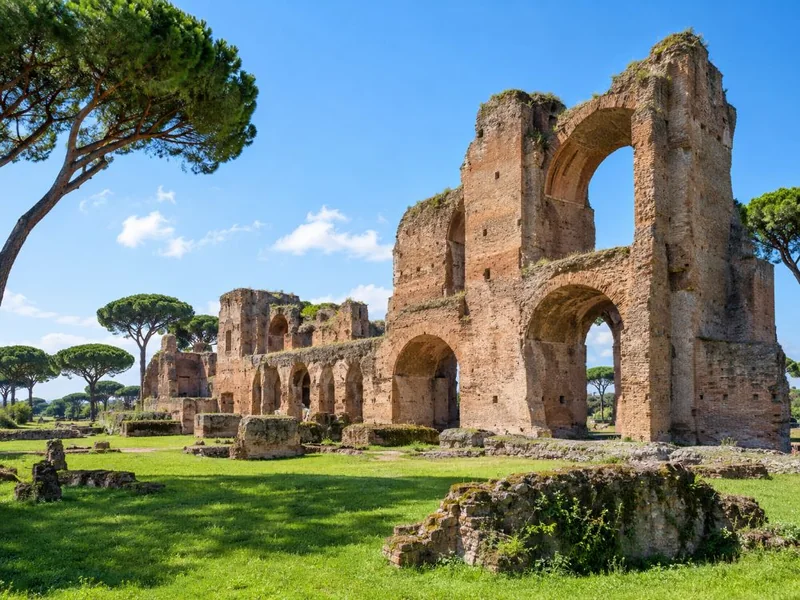
Villa of Maxentius and Mausoleum of Cecilia Metella along the route, then the Parco degli Acquedotti
With the catacombs option: entry to San Callisto or San Sebastiano; with the food option: lunch or aperitif
Minimum age 12 years and minimum height 150 cm; free cancellation up to 24 hours before
Air-conditioned minibusSan Sebastiano or DomitillaIn English
By air-conditioned minibus from Piramide: a stretch of the Appian Way on foot, Cecilia Metella from the outside and a catacomb at closing time, when there are fewer visitors.
What's included
Expert English-speaking guide and air-conditioned minibus, group of maximum 18 people
A stretch of the Appian Way on foot and the Mausoleum of Cecilia Metella from the outside
Entry to the San Sebastiano or Domitilla catacombs, depending on the day
The Roman aqueducts, if you choose the option that includes them
Shoulders and knees covered; not suitable for wheelchairs and strollers
Duration3.5 hoursMaximum 18, in EnglishBook this →
Four other ways to explore it
A long e-bike tour, a rental bike for a self-guided ride, just the San Callisto catacomb and a 17 km trek
All take you to the Appian Way. The differences are in the transport, distance covered, language, starting point and whether catacombs are included or not. All data comes from the individual offers.
Offer
Departure
Ideal for
Duration
Language
Catacombs
Cancellation
Appian Way and Aqueducts by e-bike
Depending on the option chosen
First time on the Appian Way, with aqueducts and a meal break
For all the above offers, cancellation is free up to 24 hours before. The catacombs can only be visited with a guide, no photos allowed, with shoulders and knees covered, and at a cool, damp temperature.
What you really pay
The road is free. The distance isn’t.
On the Appian Way there’s no entrance ticket: the road and the open sections of the park can be explored freely. You pay for some monuments in the Archaeological Park, such as Cecilia Metella’s Mausoleum or Villa dei Quintili, and for the catacombs, which can only be visited with a guide. The real obstacle is another: the beautiful sights are spread over kilometres of Roman basalt paving stones, with little shade and few bars.
That’s why what you buy on GetYourGuide is almost never the Appian Way itself. It’s a way to cover the distance, an e-bike, a golf cart or a minibus, a guide who tells you what you’re looking at, and often pre-arranged catacomb entry. If you have the legs, time and desire to explore on your own, bus 118 and a good pair of shoes are enough. If you have half a day and want to see everything, the tour is for this.
312 BC
The year in which the censor Appius Claudius Caecus began the road to Capua. Since 27 July 2024, the Appian Way has been a UNESCO World Heritage site.
Porta San SebastianoQuo VadisSan CallistoSan SebastianoCecilia MetellaVilla dei QuintiliAqueducts
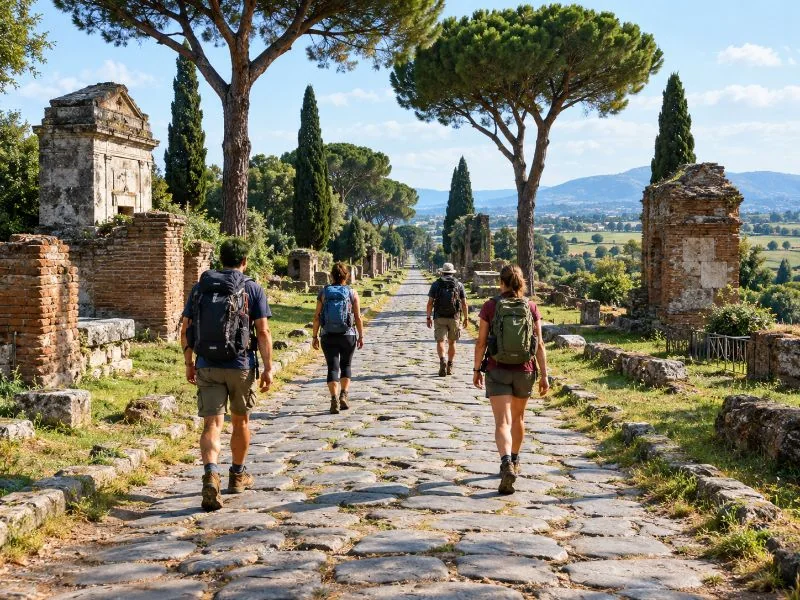
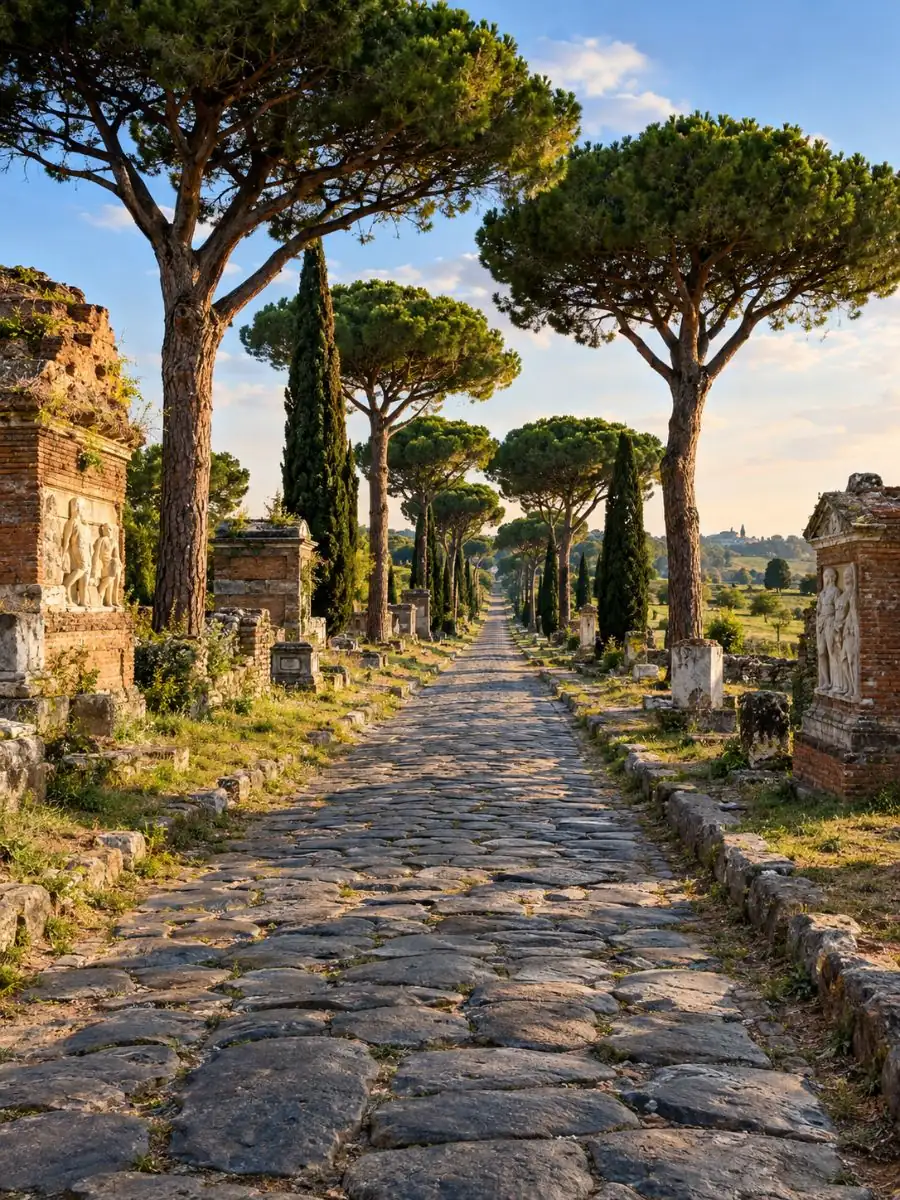
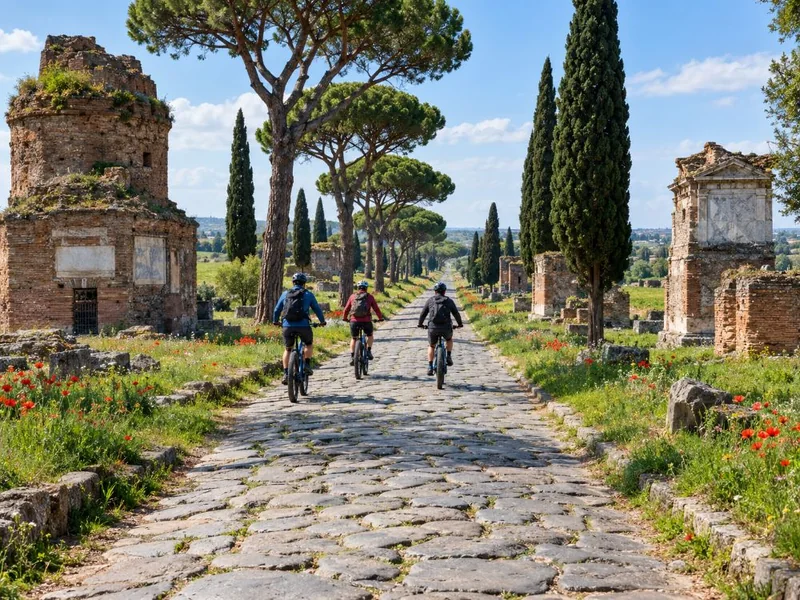
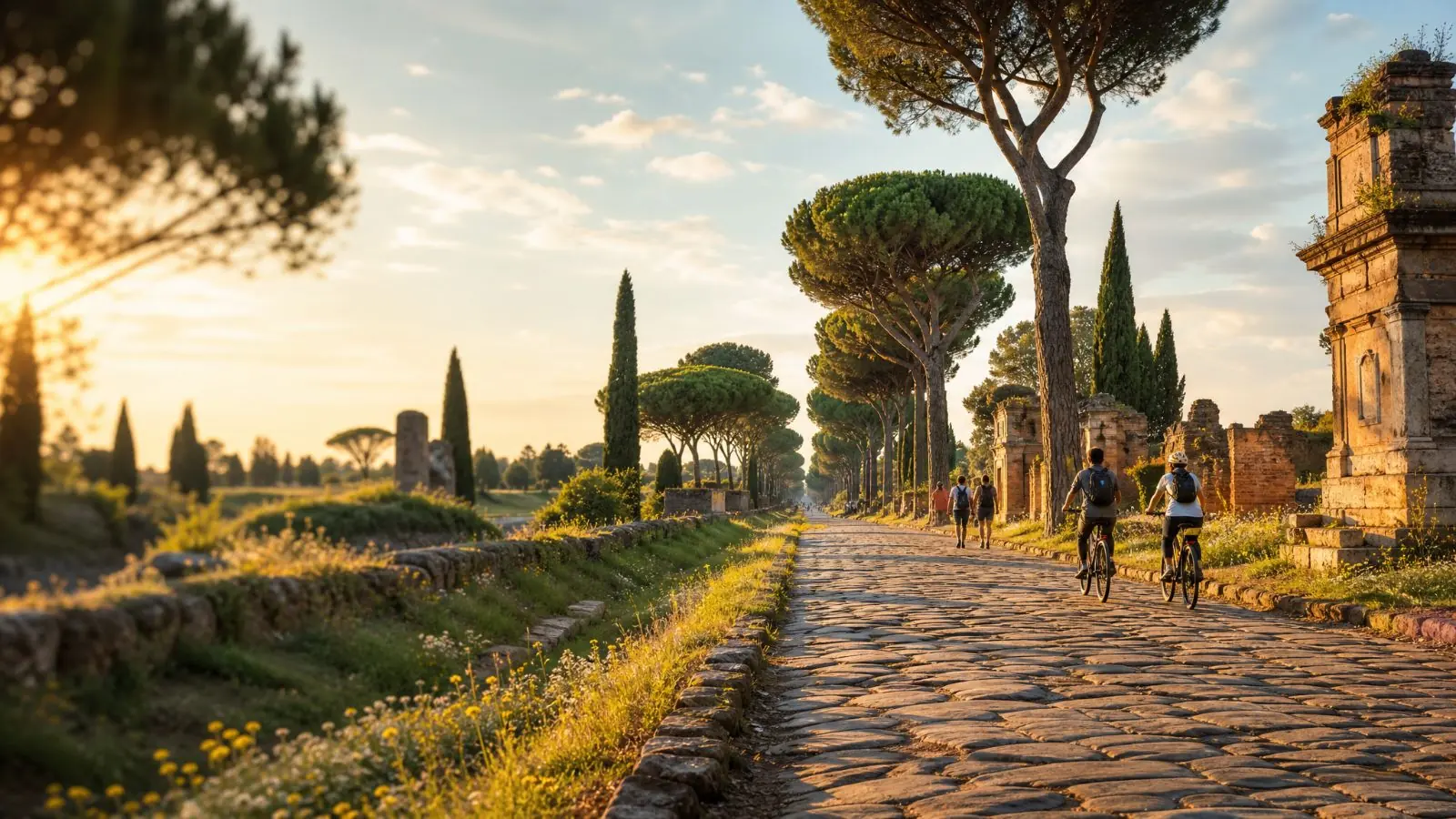
The Queen of Roads: Roman basalt paving stones, pines and tombs lining the route.
01
On your own, free
Bus 118 to the catacombs, then walk past Cecilia Metella: the road can be freely explored.
02
Catacombs with a guide
They can only be visited with a guided tour and each has its own closing day: San Callisto on Wednesdays.
03
The distance
The well-preserved stretch is long: on an e-bike you can cover it with the aqueducts in half a day.
04
Who doesn’t need a tour
Those who enjoy walking, have a free day and book the catacomb themselves.
The day
The Appian Way in four stages
On foot, by bike or with a tour, the sequence is more or less the same: from the city walls towards the Roman countryside.
01
Porta San Sebastiano
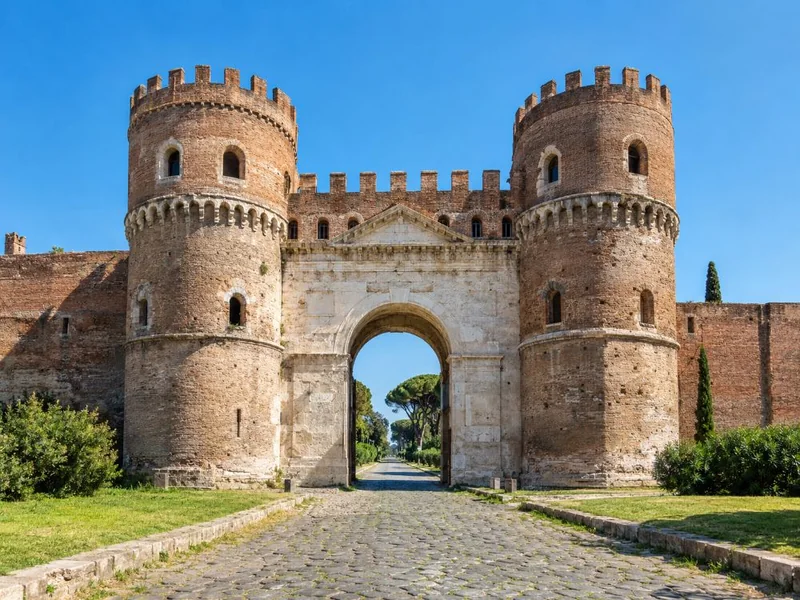
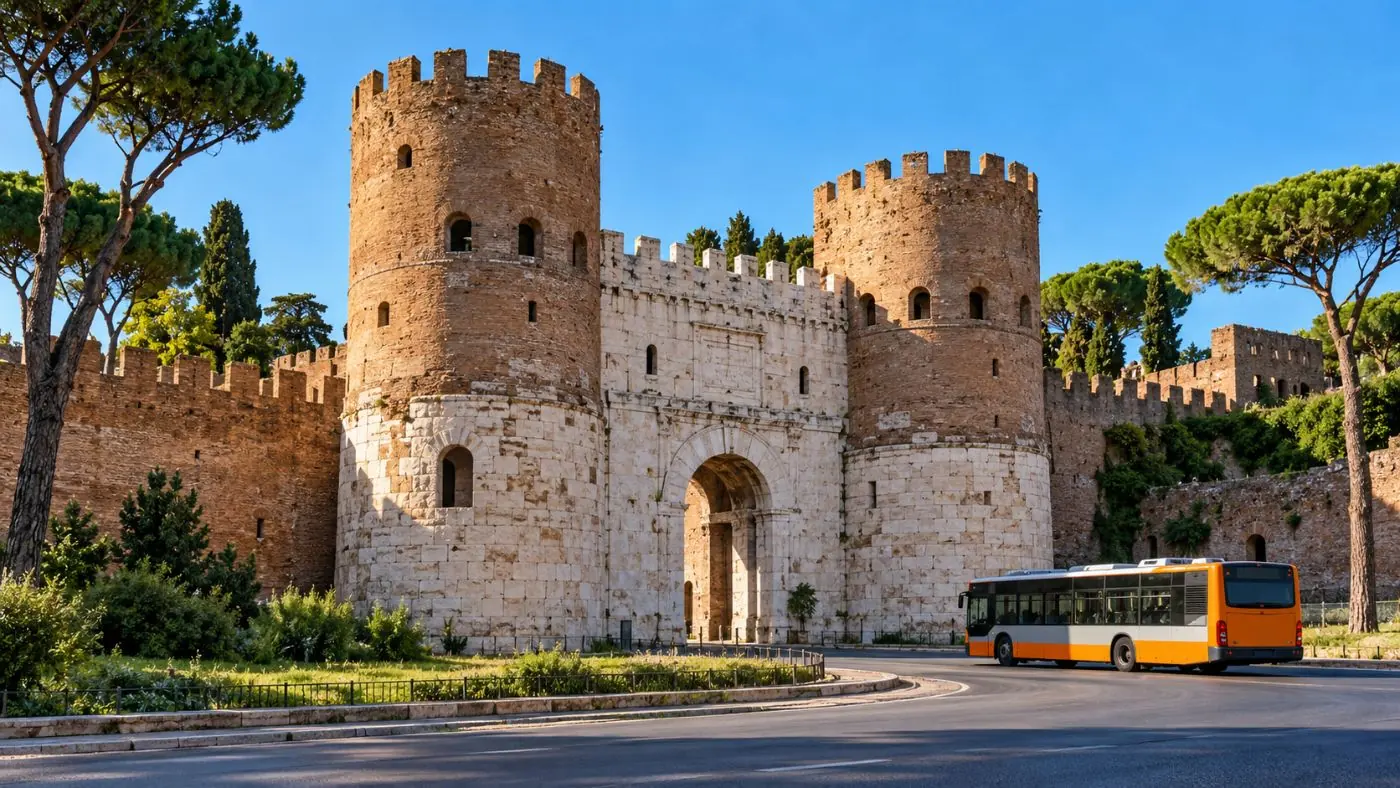
The ancient Porta Appia in the Aurelian Walls, with the Museum of the Walls. Here the road exits the city, still with traffic.
The starting point
02
Quo Vadis and catacombs
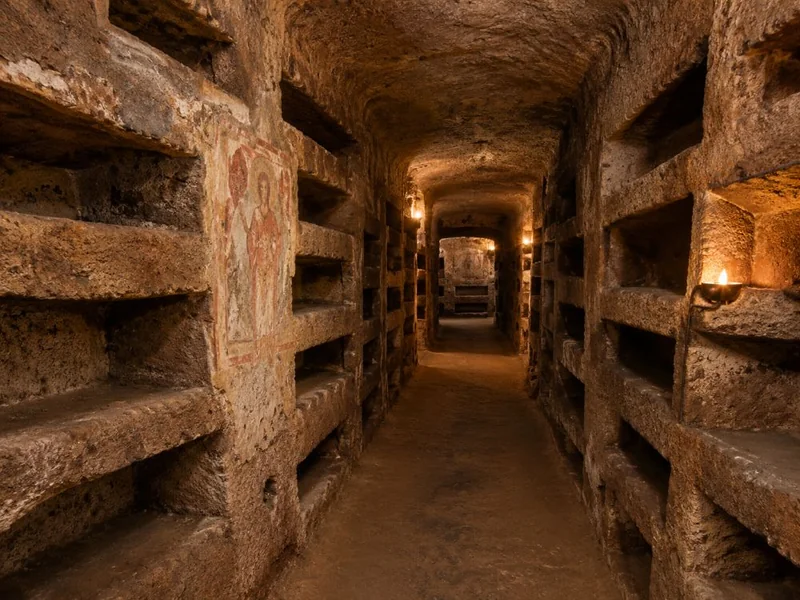
The small Domine Quo Vadis church at the junction with Ardeatina, then San Callisto and San Sebastiano, beneath the fields.
Guided visit only
03
Cecilia Metella
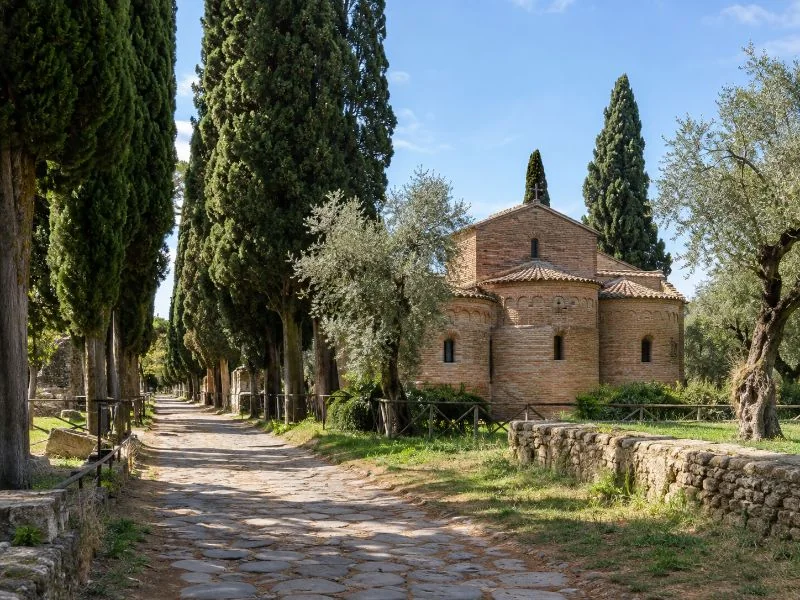
The large circular mausoleum from the 1st century BC, incorporated into a medieval castle. From here, the Roman basalt paving stones and the tranquility.
Paid monument
04
Quintili or Acquedotti
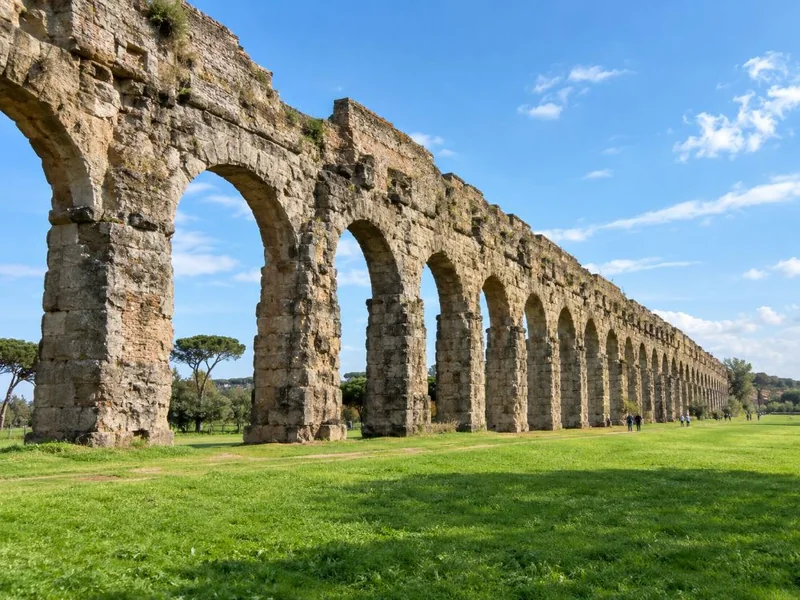
Further south, Villa dei Quintili; to the east, by bike or metro, the arches of Parco degli Acquedotti.
How to get there, when to go, who can come and what to bring.
Bus 118: runs along the Appian Way from the Circo Massimo and Piramide area and stops near the catacombs and the information point.
Bus 660: from metro A Colli Albani reaches the Cecilia Metella section, convenient for those who want to walk south.
Metro A: for Parco degli Acquedotti, which can be reached from the stations on the south-east side of the line.
With a tour: the golf cart departs from Largo Argentina, the minibus from Piramide, the long e-bike tour from Via Labicana near the Colosseum.
Weekends: from 19 September 2026, a trial limited traffic zone restricts cars on Saturdays and Sundays from 7 am to 7 pm, excluding August.
Early morning or late afternoon: there is little shade on the Appian Way; in summer, avoid the middle of the day.
Spring and autumn: green fields, soft light and ideal temperatures for cycling.
First Sunday of the month: sites in the Archaeological Park participate in the free Museum Sunday with free entry.
E-bike: the recommended tour requires a minimum age of 12 and height of 150 cm, depending on the offer.
Young children: the long e-bike tour provides child seats and extensions for the little ones; the golf cart accepts children from 2 years old.
Reduced mobility: the catacombs have stairs and uneven floors; the minibus tour is not suitable for wheelchairs.
Experienced walkers: the guided trek covers about 17 km on rough terrain.
Closed, comfortable shoes: the Roman basalt paving stones are uneven and slippery when wet.
Water and sun protection: there are few refreshment points along the road.
A light jacket for the catacombs, which are cool and damp even in summer.
Covered shoulders and knees if the itinerary includes a catacomb; an ID if you rent a bike.
312 BCThe roadStarted by Appius Claudius Caecus towards Capua.
2024UNESCOWorld Heritage since 27 July 2024.
118The busThe one that travels along the Appian Way.
3CatacombsThree catacombs, three different closing days.
7-19Weekend limited traffic zoneSaturday and Sunday, trial starting 19 September 2026.
9 kmOn footA classic walk, 4-6 hours with stops.
On site
Where it starts and where it ends
Appian Way, Rome
From Porta San Sebastiano heading south, 00179 Rome
The Appian Way starts at Porta San Sebastiano and heads down towards the Castelli Romani. If you're going on your own, take bus 118 or 660; tours each have their own meeting point, some in the city centre and others directly on the Appian Way. The exact location is always indicated in the booking confirmation.
E-bike with aqueducts: meeting point according to the chosen option, indicated in the confirmation
Golf cart: Via Monterone 19, near Largo di Torre Argentina
Minibus: Piramide metro station, opposite Piazzale Ostiense
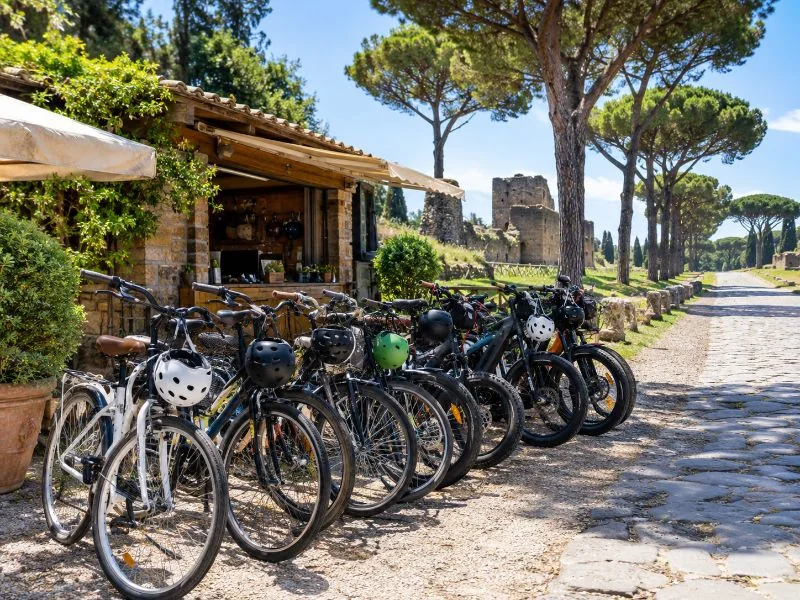
Long e-bike tour: Via Labicana 49, near the Colosseum; bike rental: Via Appia Antica 60
San Callisto: ticket office at Via Appia Antica 110; Castel Gandolfo by e-bike: Via Appia Antica 136
We loved the tour with Bruno, who was very knowledgeable and friendly. The lunch was excellent: gnocchi, aubergines and spritz.
★★★★★
The guide was very knowledgeable: an excellent choice when you're tired of walking and want to see more.
★★★★★
Our guide was very knowledgeable and the aqueducts area was beautiful.
★★★★★
This tour was the highlight of our stay in Italy: at every stop Davide really made us understand the history.
★★★★★
We really enjoyed our first e-bike tour: we saw a part of Rome we would never have seen otherwise.
★★★★★
The e-bikes made it very easy. The staff were very kind and knowledgeable.
★★★★★
Walking the Appian Way with Sal is an incredible opportunity to experience history, through stories and poems.
★★★★★
Our guide Gaia was delightful and very knowledgeable. I recommend it, and it’s also very relaxing.
★★★★★
We loved it: the perfect length, short, detailed and packed with interesting information.
A full day
From the Appian Way to the lake
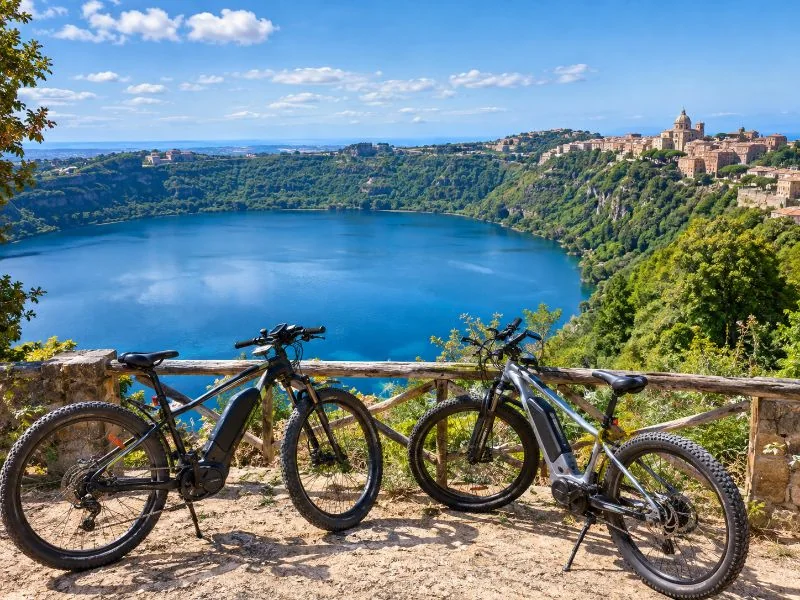
The tours above stay within Rome. Those who enjoy cycling can follow the Appian Way out of the city, all the way to the Castelli Romani and the crater of Lake Albano.
The full day: by e-bike along the Appian Way towards the Castelli Romani, up to the crater of Lake Albano and Castel Gandolfo, with time for lunch (not included). According to the offer, about three-fifths of the route is on the historic Appian Way, the rest on roads open to traffic, with a riding test before departure.
Lake AlbanoCastelli RomaniFree until 24 hours before
Those looking for a tour of the Appian Way find two worlds: a public, open and free road, and a long list of tours with photos of the same pines and the same Roman basalt paving stones. They all go to the same place. What sets them apart is rarely in the title. Here’s how to read them.
The Queen of Roads
The censor Appius Claudius Caecus began the road in 312 BC to connect Rome to Capua; later it was extended to Brindisi, the port to the East. The poet Statius called it the queen of the long roads, and the name Regina Viarum has stuck. Along its edges the Romans buried their dead, as it was forbidden within the walls: this is why the Appian Way is a line of tombs, mausoleums and, beneath the fields, catacombs. In 71 BC, after Spartacus’ revolt, six thousand slaves were crucified along the road between Capua and Rome; according to the Acts of the Apostles, Saint Paul arrived in Rome by travelling it. Since 27 July 2024, the Via Appia has been a UNESCO World Heritage site, the sixtieth Italian site.
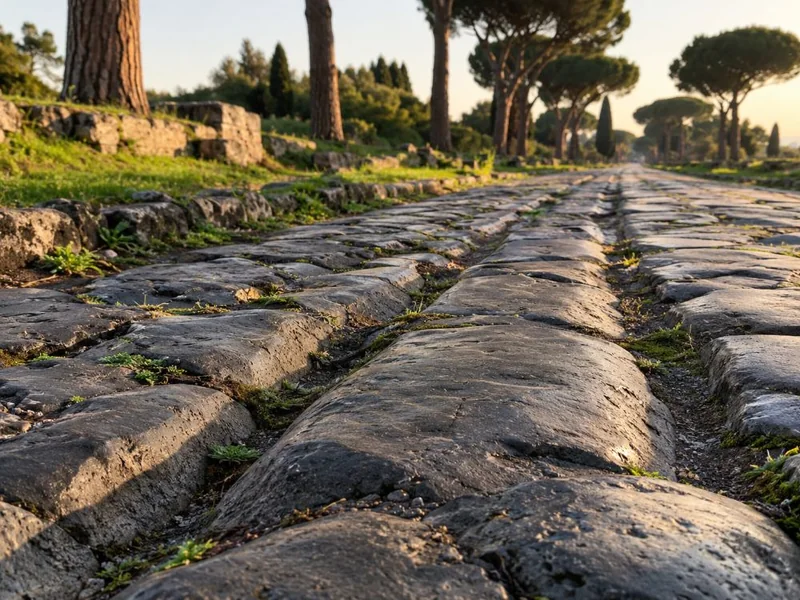
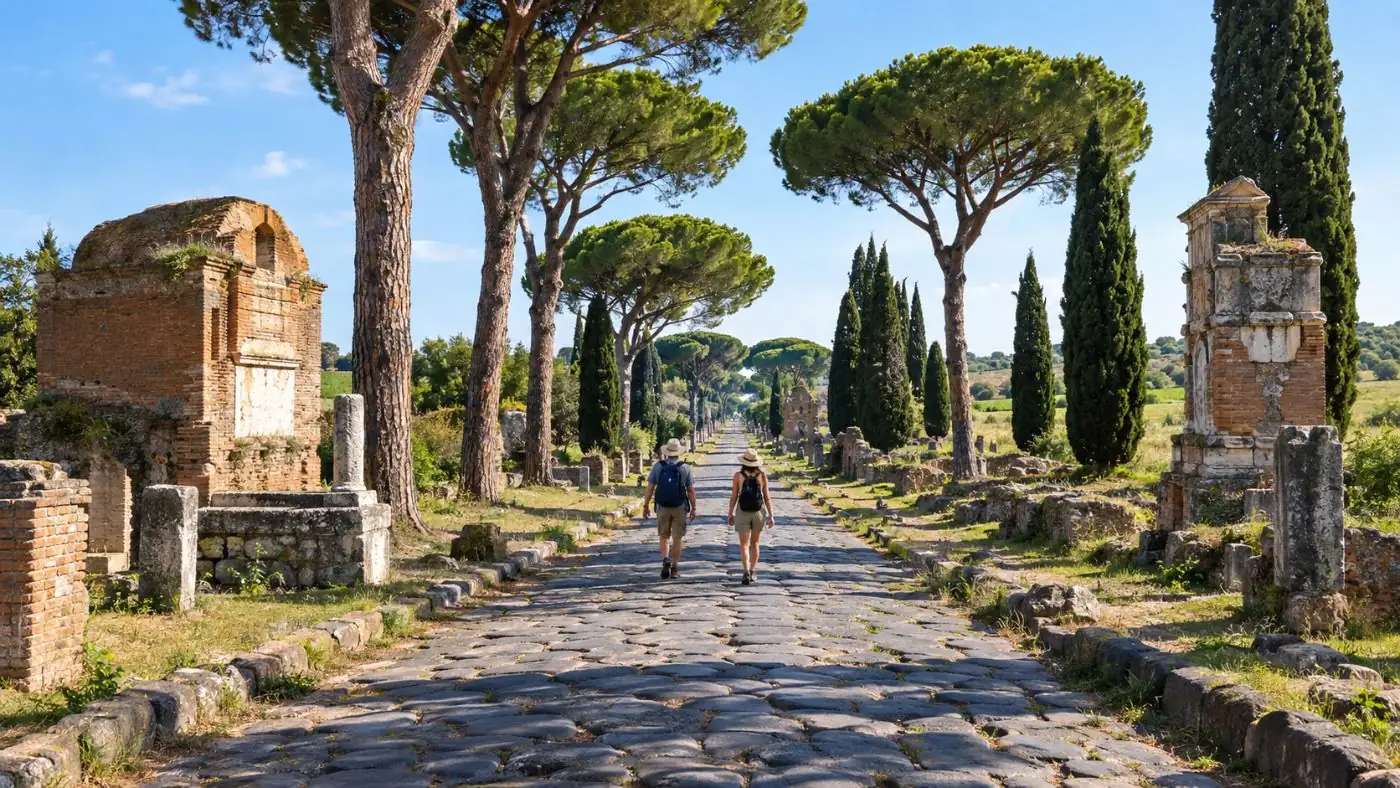
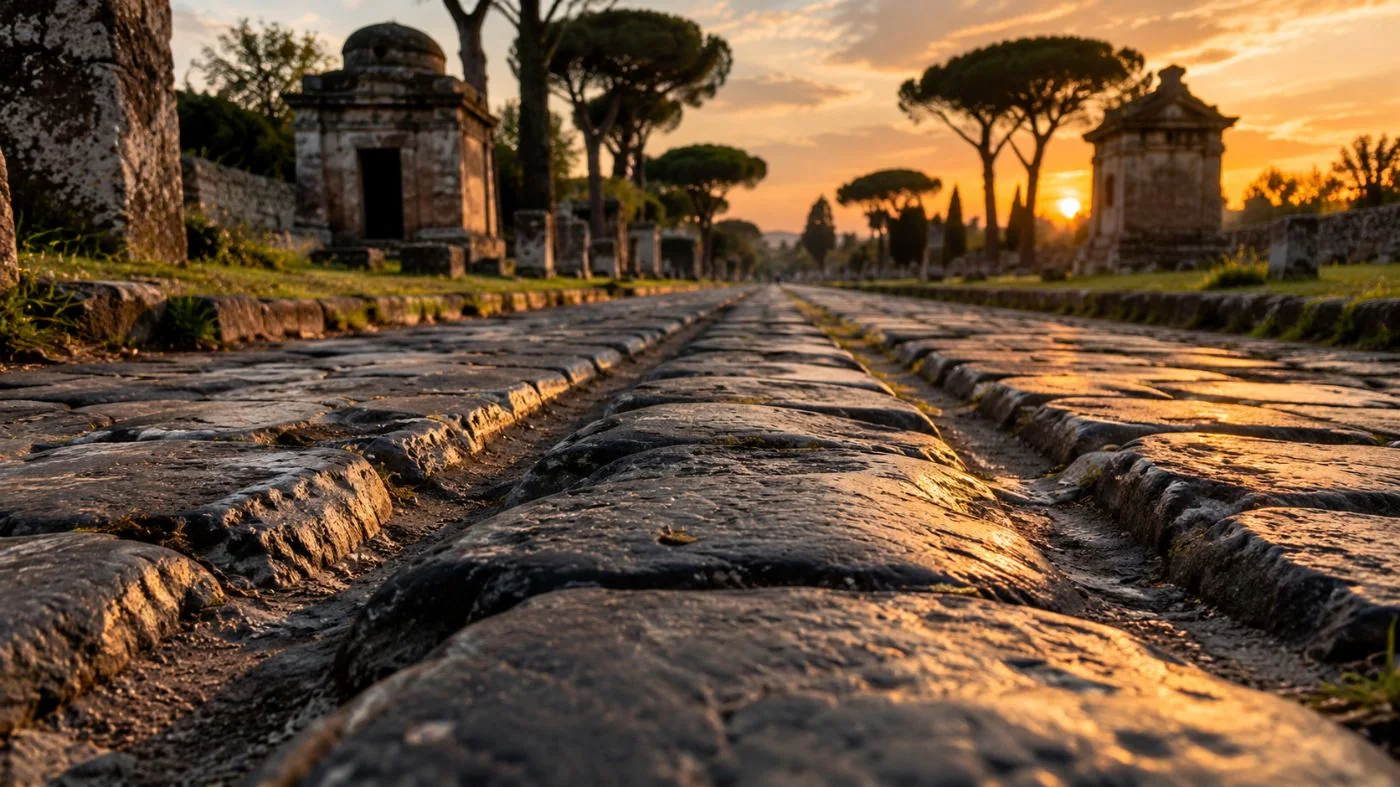
The Roman basalt paving stones: in many sections you can still see the ruts from the wheels.
Two parks, one road
The Appian Way is managed by two different bodies. The Appian Way Archaeological Park, run by the Ministry of Culture, oversees monuments such as the Mausoleum of Cecilia Metella with the Castrum Caetani, Capo di Bove and the Villa dei Quintili, which require a ticket and have one weekly closing day. The Regional Park includes large green areas such as Caffarella and Parco degli Acquedotti. The catacombs, however, are managed by ecclesiastical bodies: they can only be visited with a guide and each has its own opening hours. San Callisto is closed on Wednesdays, San Sebastiano on Mondays, Domitilla on Tuesdays.
The honest advice: the first kilometre and a half after Porta San Sebastiano is the least pleasant, with cars and narrow sidewalks. Whether you walk or cycle, the real Appian Way begins after the catacombs and especially after Cecilia Metella. From 19 September 2026, a trial limited traffic zone will reduce traffic on Saturdays and Sundays from 7 am to 7 pm, excluding August.
On your own or with a tour
Going solo works well: take bus 118 to the catacombs, book a guided tour at San Callisto or San Sebastiano, then walk towards Cecilia Metella and beyond. Or rent a bike at the point in Via Appia Antica 60 and decide as you go. Tours are useful when time is short or the distance seems daunting: the e-bike covers the Appian Way and Parco degli Acquedotti in half a day, the golf cart departs from the historic centre and includes entry to a catacomb, the minibus solves the transfer and reaches the catacombs at the end of the day, when there are fewer people.
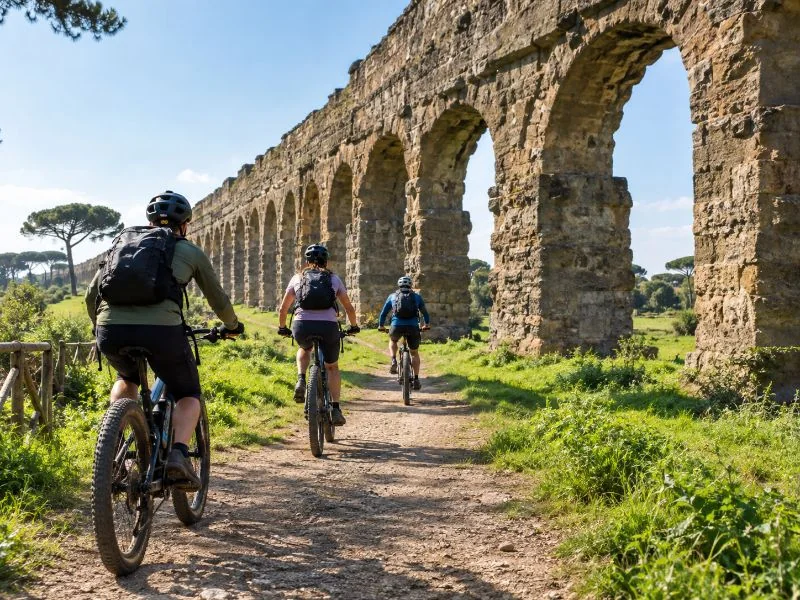
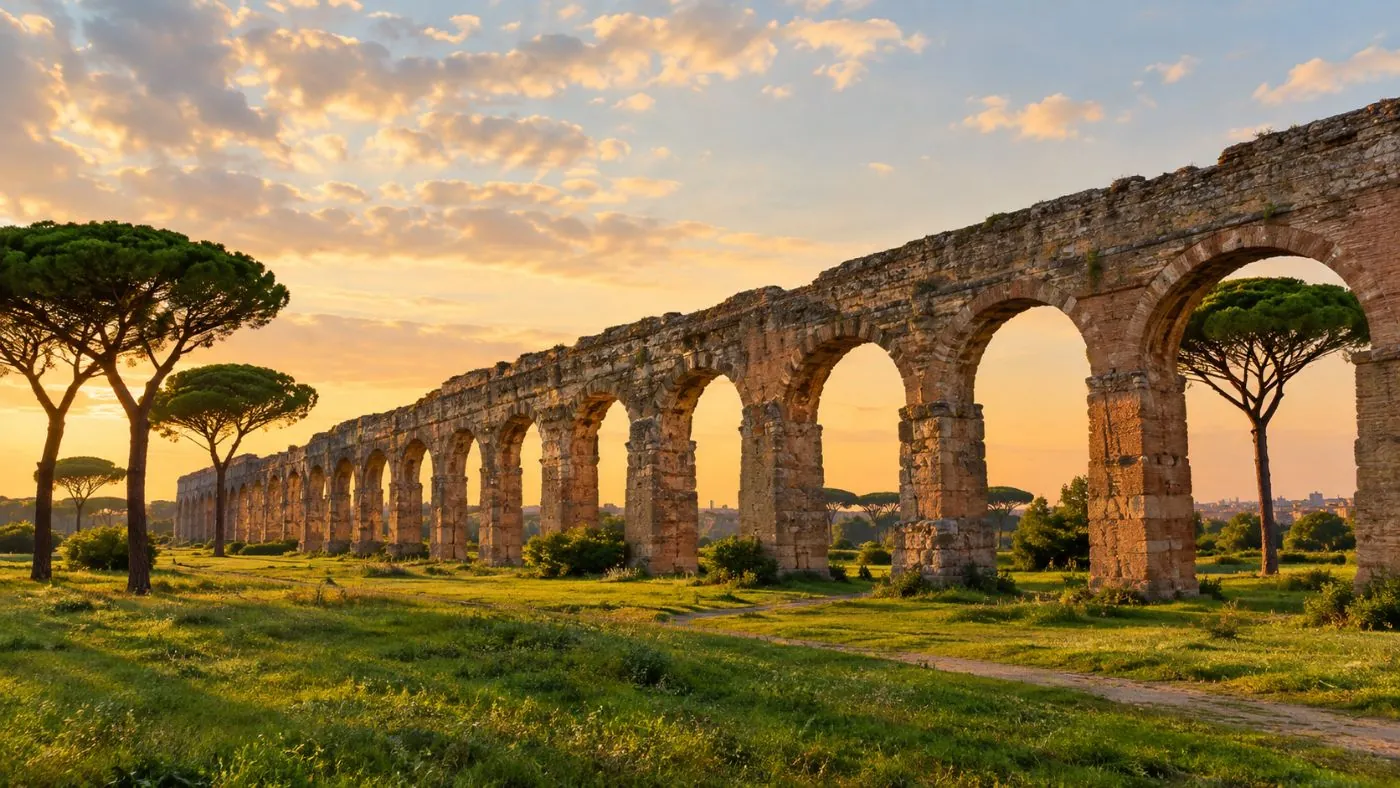
Parco degli Acquedotti: the final stop on many e-bike tours.
Which option, for whom
If it’s your first time and you want to see a lot, choose the e-bike with aqueducts and add the catacomb or lunch. If cycling isn’t for you, the golf cart is the most relaxed option and includes the catacomb. If you prefer a minivan and a guide who explains everything in English, there’s the minibus from Piramide. Walking lovers can go solo or join the 17 km trek, and those who enjoy cycling all day can go as far as Castel Gandolfo. How to get there by public transport is in our transport guide.
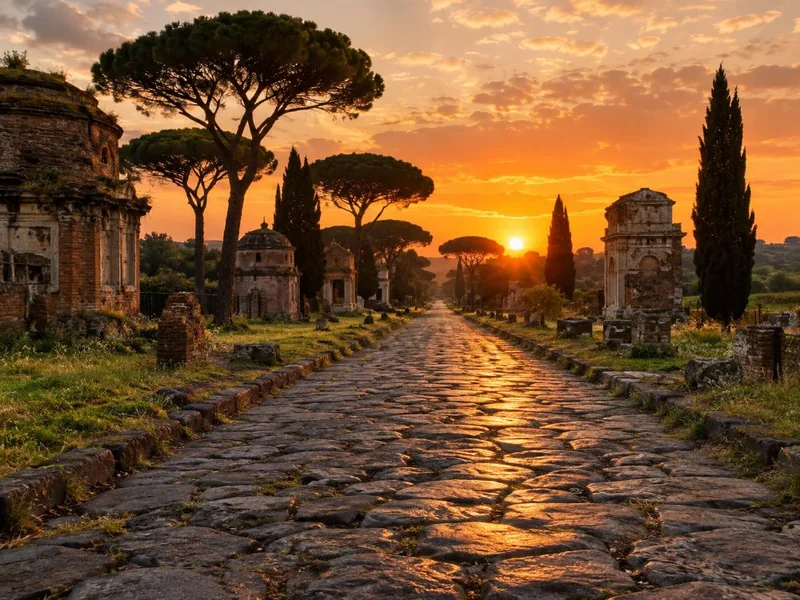
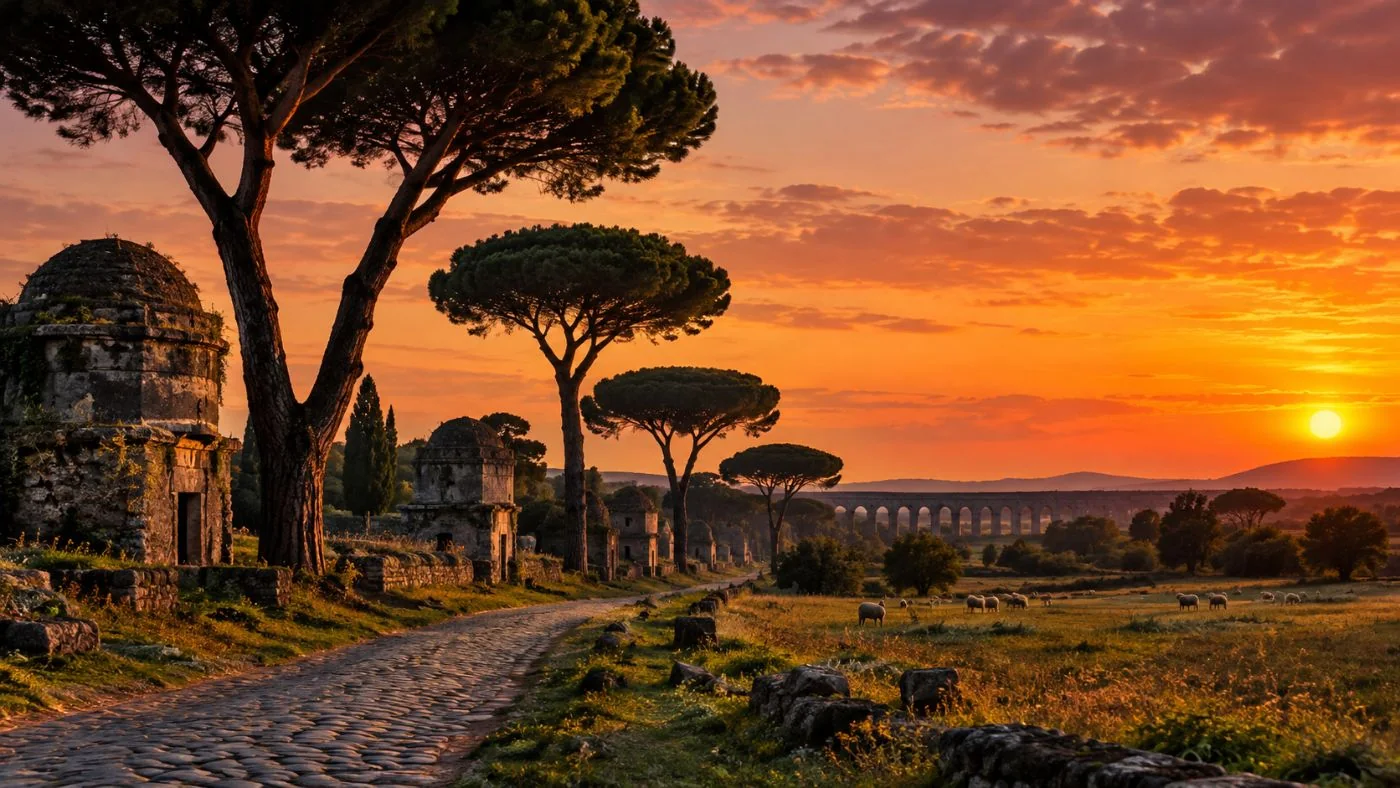
The Appian Way is at its best at sunset: set off in the late afternoon in summer.
Clear answers to the most frequent questions about the Appian Way.
Is the Appian Way free?
Yes, the road and the open sections of the park can be freely explored on foot or by bike. Some monuments, such as the Mausoleum of Cecilia Metella or Villa dei Quintili, and the catacombs require a fee and can only be visited with a guide. What’s free and what’s not.
What is the best way to see the Appian Way?
For many travelers, a bicycle - preferably electric - is best: the distances are long and the Roman basalt paving stones are uneven. Those who prefer walking can take bus 118 to the catacombs and continue on foot beyond Cecilia Metella, where traffic thins out. The Appian Way by bike.
Can you walk on the Appian Way?
Yes, you can still walk along the ancient road, on the Roman basalt paving stones with the ruts from cart wheels. The first stretch from Porta San Sebastiano has traffic and narrow sidewalks; the most beautiful part starts after the tomb of Cecilia Metella. Route and walking times.
How long does it take to walk the Appian Way?
Walking it all the way would take about 119 hours. In Rome, the well-preserved stretch can be done in a morning or an afternoon: a classic 9 km walk takes 4-6 hours with stops.
Can you drive on the Appian Way?
Partly, but most of the route is designed for pedestrians and cyclists. From 19 September 2026, a limited traffic zone with electronic gates is being trialled on Saturdays and Sundays from 7 am to 7 pm (excluding August), between Via delle Mura Latine and Via Appia Pignatelli. How to get there.
How do you get to the Appian Way from the Colosseum?
By bus 118, which runs along the Appian Way and stops near the San Callisto and San Sebastiano catacombs. Alternatively, some tours start near the Colosseum, at Largo Argentina or Piramide station and include transfers.
Where does the Appian Way start in Rome?
At Porta San Sebastiano, the ancient Porta Appia in the Aurelian Walls, which today houses the Museum of the Walls. From here the road exits the city to the south, beyond the Quo Vadis church.
Which catacombs are on the Appian Way?
The most visited are San Callisto and San Sebastiano on the Appian Way, and Domitilla a little further away. They have different closing days: San Callisto is closed on Wednesdays, San Sebastiano on Mondays, Domitilla on Tuesdays. Catacombs opening hours and rules.
Who built the Appian Way?
The censor Appius Claudius Caecus, who in 312 BC began the road from Rome to Capua; later it was extended as far as Brindisi. The history of the Appian Way.
Who was crucified on the Appian Way?
In 71 BC, after the Spartacus revolt, six thousand captured slaves were crucified along the Appian Way between Capua and Rome, according to the historian Appian.
Did Saint Paul travel the Appian Way?
According to the Acts of the Apostles (28,15), the Christians of Rome went to meet him at the Forum of Appius and Three Taverns, stations along the Appian Way: Paul arrived in Rome via this very road.
Ready to go
Outside the walls, on the Queen of Roads.
E-bike with aqueducts, golf cart with catacomb, and minibus from Piramide: choose your pace, the route is already set.
 No effort
2.5 hoursMaximum 14 peopleFree cancellation up to 24 hours in advance
No effort
2.5 hoursMaximum 14 peopleFree cancellation up to 24 hours in advance