Our booking recommendation: The minibus tour of catacombs, Appian Way and Aqueducts, with free cancellation up to 24 hours before. Book this Compare options
Walking along the Appian Way without knowing its history mostly means seeing just stones and pines. Learning who built it, who was buried there and what happened along it changes the way you look at every tomb beside the road.
We have gathered the most solid and documented facts, clearly distinguishing between history and legend.
The short answer
The Via Appia was started in 312 BC by the censor Appius Claudius Caecus, initially from Rome to Capua, and later extended to Brindisi. The poet Statius called it the "queen of the long roads", hence the name Regina Viarum. In 71 BC, 6,000 slaves from Spartacus’ revolt were crucified along it, and according to the Acts of the Apostles, Saint Paul reached Rome by travelling this road. Since 27 July 2024 it has been a UNESCO World Heritage Site.
Who built the Appian Way?
The censor Appius Claudius Caecus, who started it in 312 BC. The road bears his name.
The first route connected Rome to Capua in Campania, at a time when Rome was extending its control towards the South. Later the road was extended to Brindisi, the ancient Brundisium, the great Adriatic port from which routes to Greece and the East departed.
The fact that a public road took the name of the magistrate who had commissioned it later became a custom for the great Roman consular roads.
Why is the Appian Way so famous?
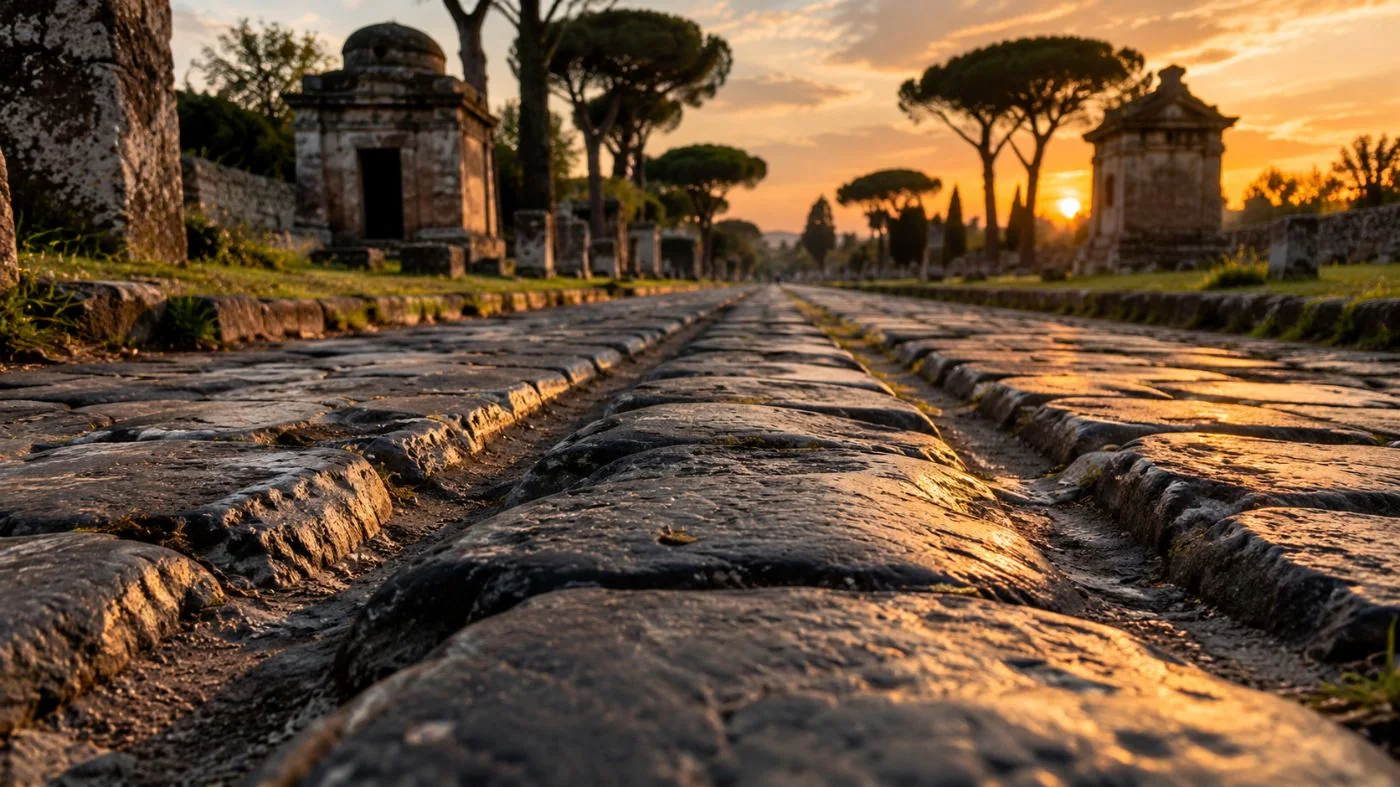
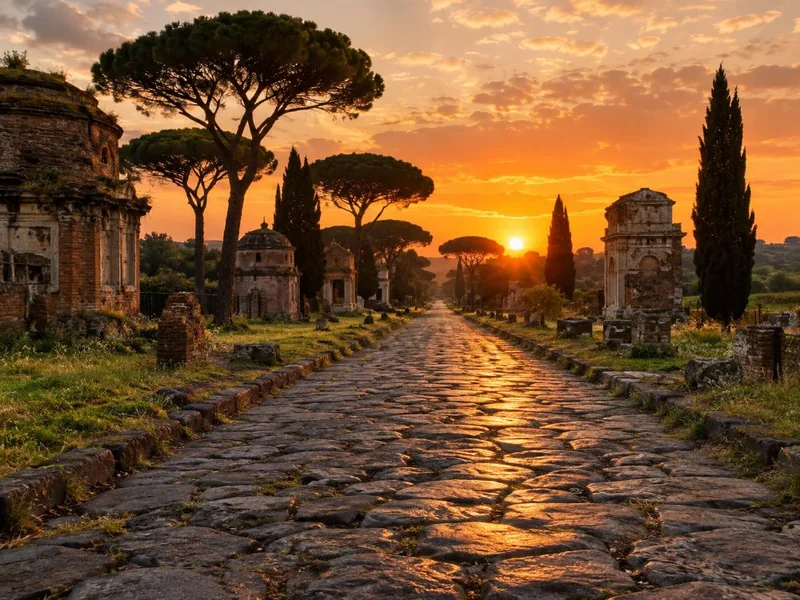
Because it was the first great long-distance Roman road, it connected Rome to the South and the East and has been extraordinarily well preserved, with Roman basalt paving stones, tombs and villas still visible.
Even the ancients recognised its value: Statius, in the Silvae, defined it as "regina longarum viarum", the queen of the long roads. This is how it got the name by which it is still known today, Regina Viarum.
On 27 July 2024, during the 46th session of the World Heritage Committee in New Delhi, "Via Appia. Regina Viarum" was inscribed on the UNESCO List. It is the 60th Italian site, consisting of 22 components spanning over 800 km, including the Via Appia Traiana variant.
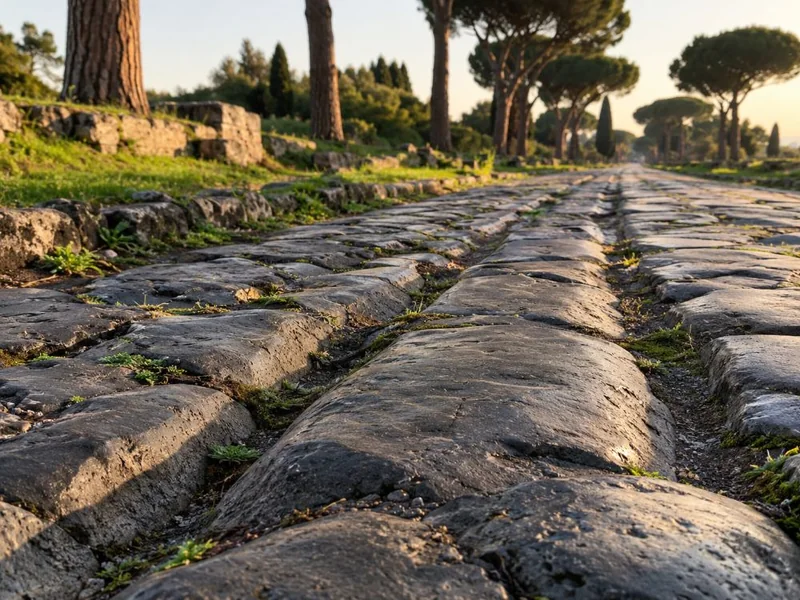
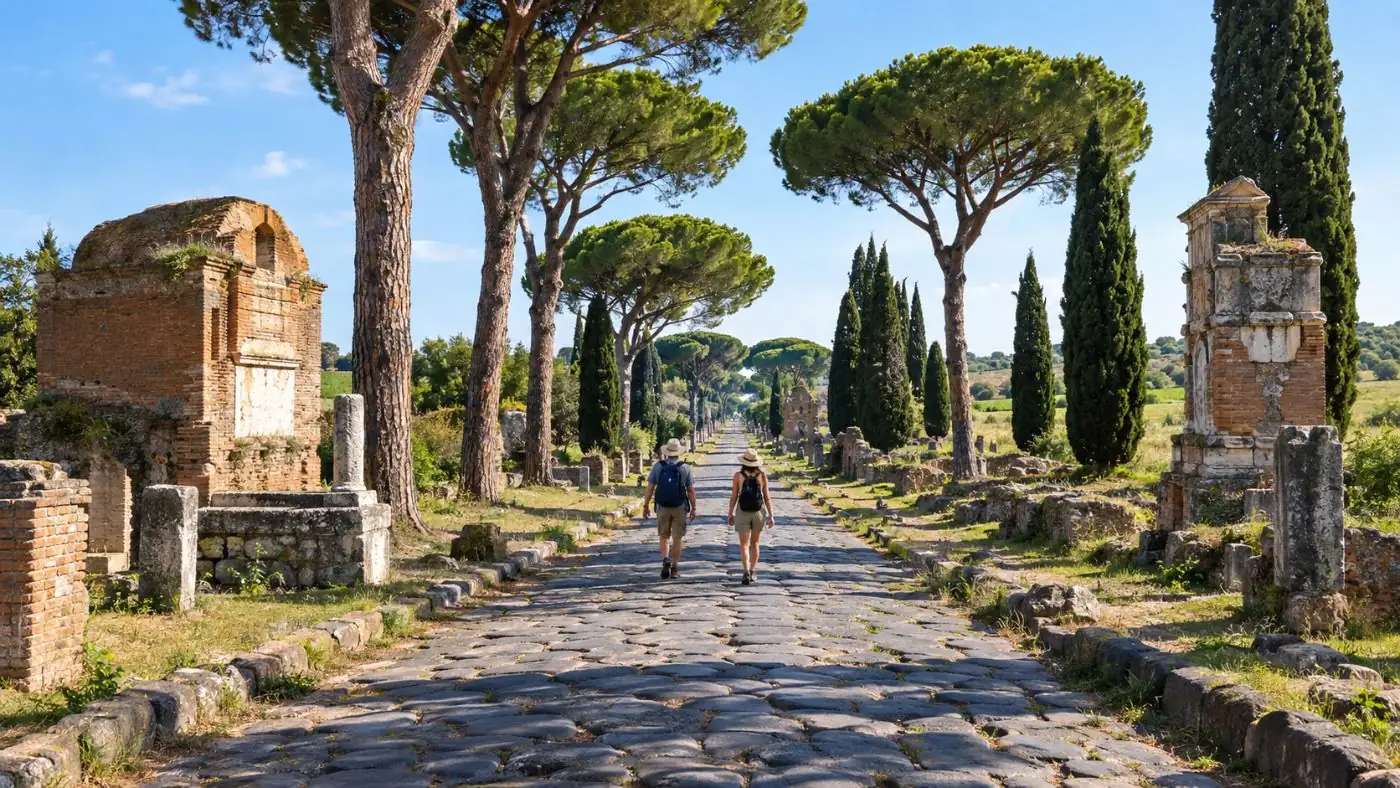
Walk on the Roman basalt paving stones and descend into a catacomb with a guide who tells the history: the minibus tour departs from Piramide.
Book thisWhich is the oldest Roman road?
The Appian Way is not the oldest road in absolute terms, but it is the oldest and most famous of the great Roman consular roads built as a public work and linked to the name of a magistrate.
Before 312 BC, there were already routes and connections used for centuries, such as the Via Salaria. What makes the Appian Way special is the scale of the project: a road designed to connect Rome to distant regions, built as a state infrastructure.
So be wary of claims that it is the "oldest road in the world": this is not true, and the Appian Way does not need such a title.
Who was crucified on the Appian Way?
In 71 BC, after the Spartacus revolt, 6,000 captured slaves were crucified along the Appian Way between Capua and Rome.
The episode is reported by the historian Appian in the Civil Wars (Book I, 120). Spartacus, a gladiator from the school in Capua, had led one of the greatest slave revolts in Roman history. After the defeat, the punishment of the prisoners was made visible along the most travelled road in the South, as a warning.
The section involved is not the Roman stretch visited today, but the road as a whole, from Capua to the gates of Rome.
Did Saint Paul travel the Appian Way?
Yes, according to the Acts of the Apostles. The Christians of Rome went to meet him at the Forum of Appius and the Three Taverns, two locations along the road (Acts 28:15).
Paolo arrived in Italy as a prisoner, landing in Pozzuoli, and continued towards Rome. The Acts of the Apostles recount the two stops on the Appian Way where the brothers of the Roman community welcomed him.
The Appian Way is also linked to the legend of "Quo vadis?": according to tradition, Peter, fleeing Rome, met Christ and asked him where he was going. The Church of Domine Quo Vadis, at the crossroads between Via Appia and Via Ardeatina, commemorates this legendary episode.
Is the Appian Way mentioned in the Bible?
Not by its name, but two of its stations: the Forum of Appius and the Three Taverns appear in the Acts of the Apostles, chapter 28, verse 15.
The Forum of Appius was a rest station named after Appius Claudius himself; the Three Taverns another stop on the road to Rome. For readers of the New Testament, they are the sign that the final stretch of Paul’s journey took place on the Appian Way.
The connection with Christianity continues with the catacombs, dug along the road in the first centuries: find them described in our guide to the catacombs of the Appian Way.
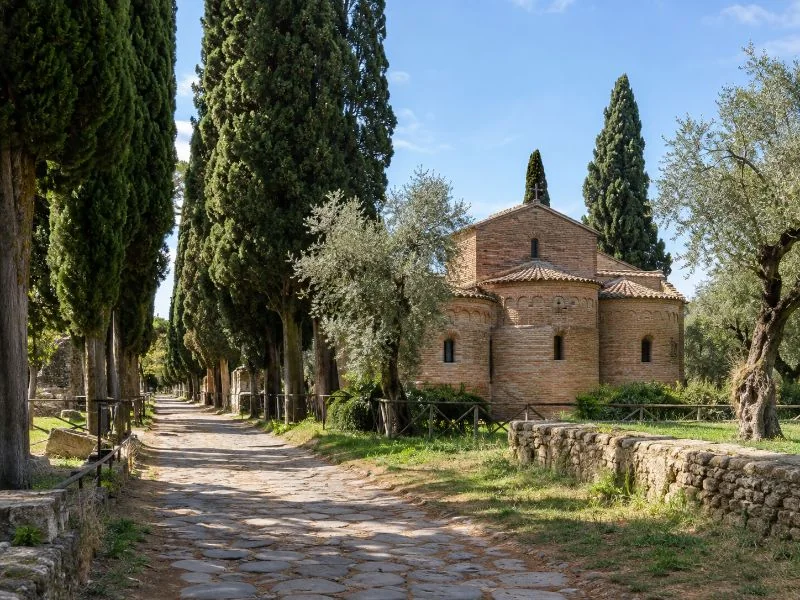
Descend into the Crypt of the Popes and the crypt of Saint Cecilia with the ticket and guided tour of San Callisto.
Book thisWhy are there so many tombs along the Appian Way?
Because in Rome it was forbidden to bury the dead inside the walls: families built funeral monuments along the roads leading out of the city, and the Appian Way was the most prestigious.
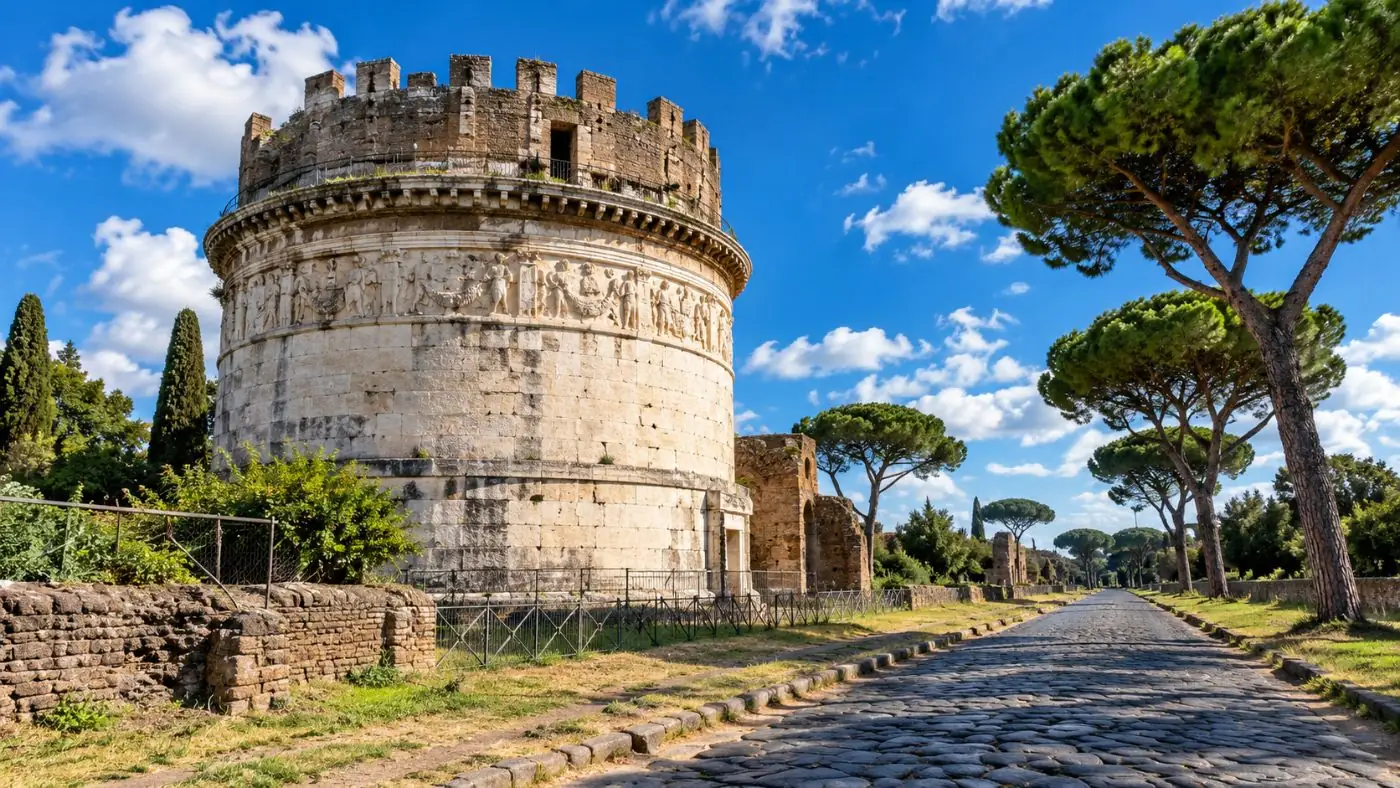
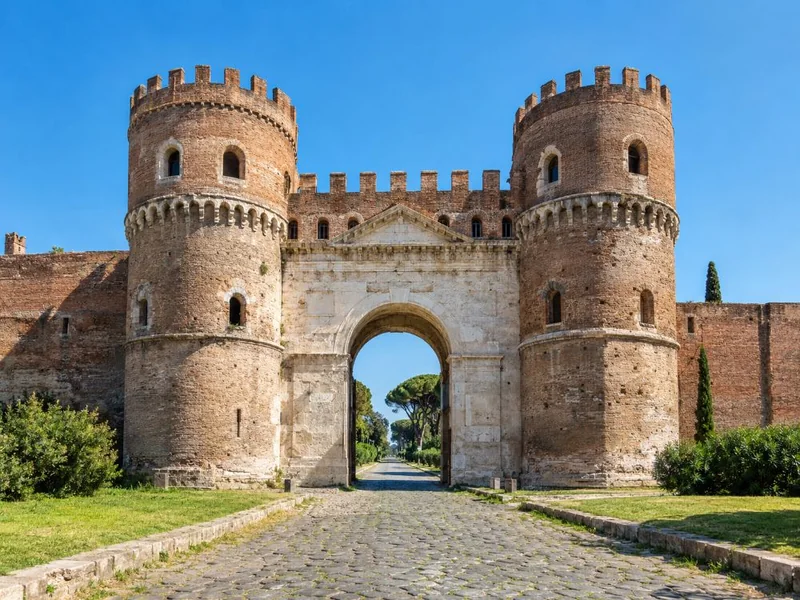
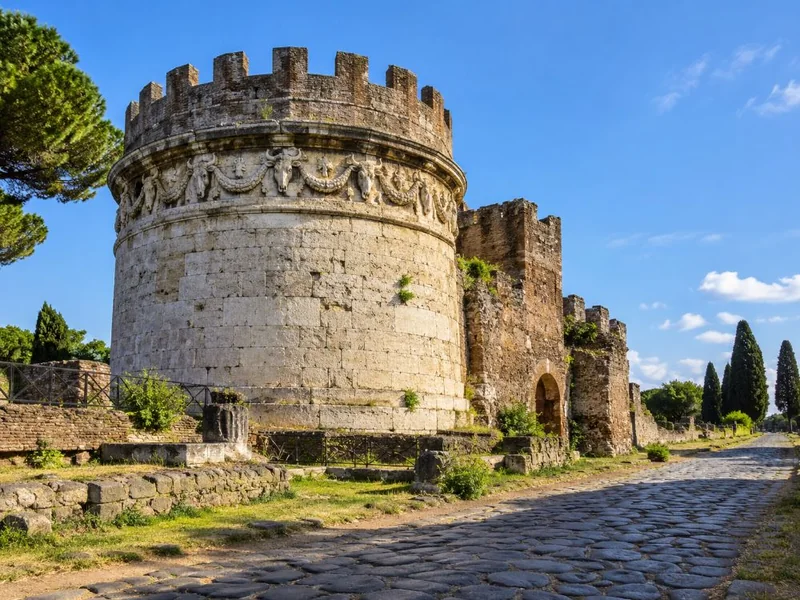
The most famous monument is the Mausoleum of Cecilia Metella, from the 1st century BC, built for Cecilia Metella, daughter of Quintus Caecilius Metellus Creticus. In the 14th century, it was incorporated into the medieval castle of the Caetani, the Castrum Caetani. Further south stands the Villa dei Quintili, belonging to the brothers Quintilius Condianus and Quintilius Maximus, which Commodus confiscated in the 2nd century AD after having them executed.
At the beginning of the 4th century AD, Maxentius had a villa with a circus built next to the road. For an itinerary through these places, read the guide on what to see along the Appian Way.
How to see the historic sites of the Appian Way?
With a guided tour that combines the road, monuments and catacombs: the minibus tour from Piramide, the ticket for San Callisto or the TopBike e-bike tour.
Il minibus tour of the catacombs, Appian Way and aqueducts includes a stretch of the road on foot, the exterior of Cecilia Metella, the aqueducts with the related option and a catacomb between San Sebastiano and Domitilla, in 3.5 hours and in English.
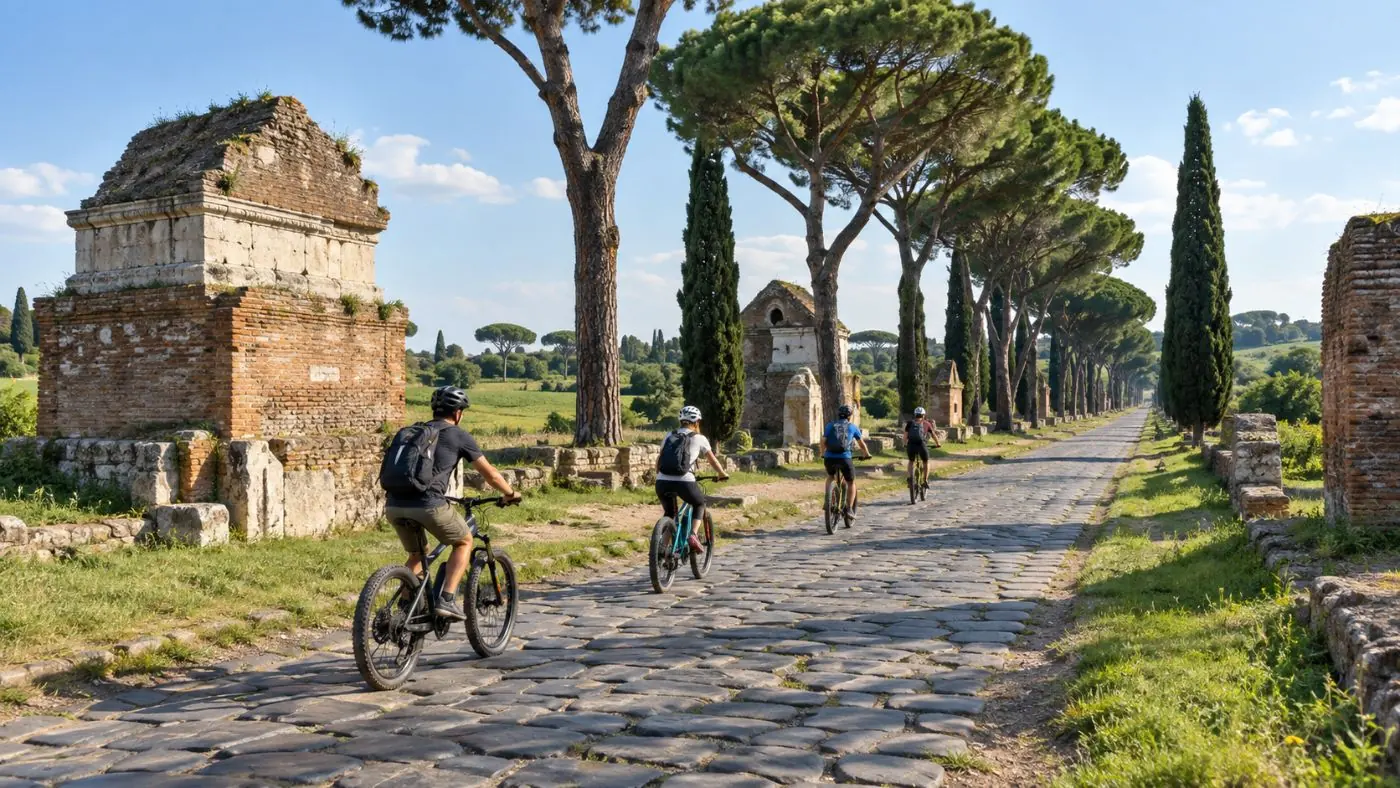
Those who prefer cycling and understand English or another of the offered languages can choose the TopBike e-bike tour, which covers villas, tombs, the Circus of Maxentius, Cecilia Metella and the aqueducts, and is also available in Italian.
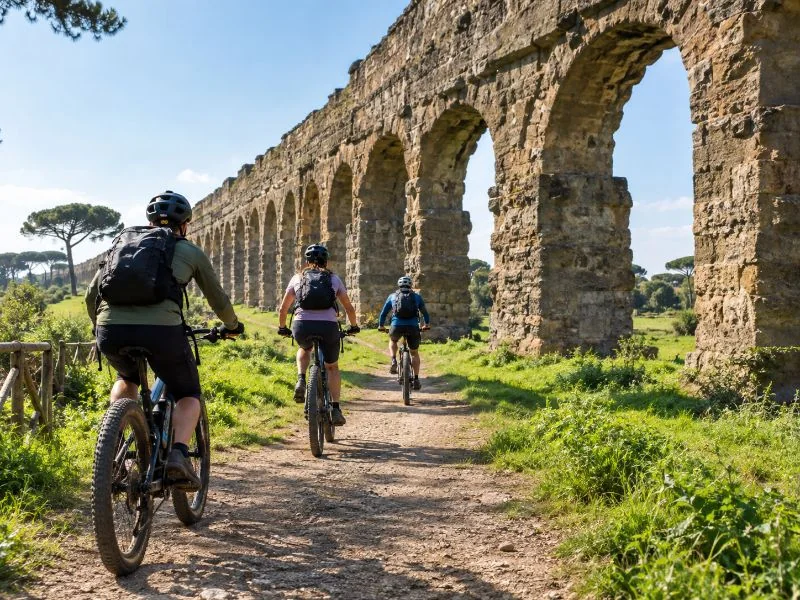
Villas, tombs, Circus of Maxentius and aqueducts by e-bike, with a guide telling the history: also in Italian.
Book thisFrequently asked questions
When was the Appian Way built?
In 312 BC, on the initiative of censor Appius Claudius Caecus. The first route reached Capua, then it was extended as far as Brindisi.
Why is it called Regina Viarum?
From the verse by Statius who defined it as "regina longarum viarum", the queen of the long roads.
Since when has the Appian Way been a UNESCO World Heritage Site?
Since 27 July 2024. It is the 60th Italian site on the World Heritage List.
How long was the Appian Way?
The UNESCO site covers over 800 km, including the Via Appia Traiana variant, between Rome and Brindisi.
Ready to book
Choose your tour
Bookable on GetYourGuide, with free cancellation up to 24 hours before.
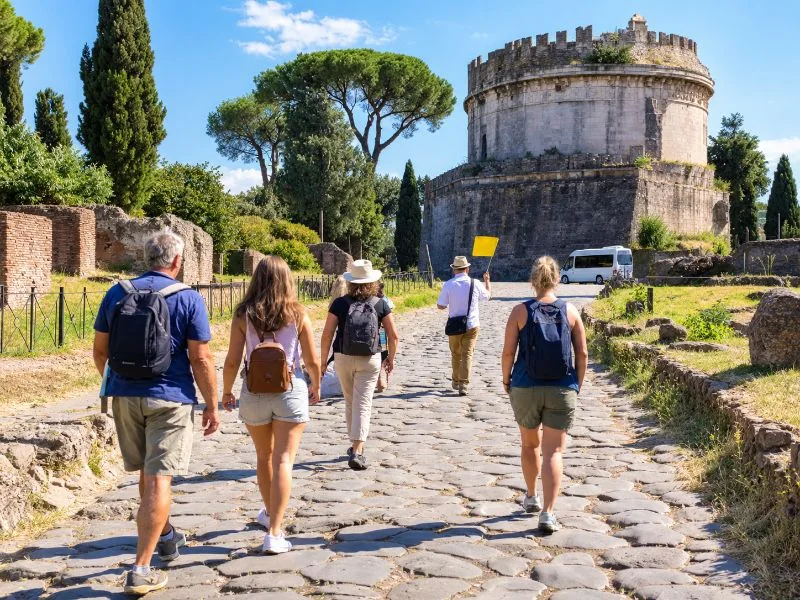
Catacombs, Appian Way and Aqueducts by minibus
- Expert English-speaking guide and air-conditioned minibus, group of maximum 18 people
- A stretch of the Appian Way on foot and the Mausoleum of Cecilia Metella from the outside
- Entry to the San Sebastiano or Domitilla catacombs, depending on the day
San Callisto Catacombs: admission and tour
Admission with guided tour of the Crypt of the Popes and the crypt of Saint Cecilia, for those arriving on the Appian Way on their own
Appian Way, Caffarella and Aqueducts by e-bike
About 27 km mostly off-road, from Caffarella to the Aqueducts; the guided tour of a catacomb is only included in the 6-hour version