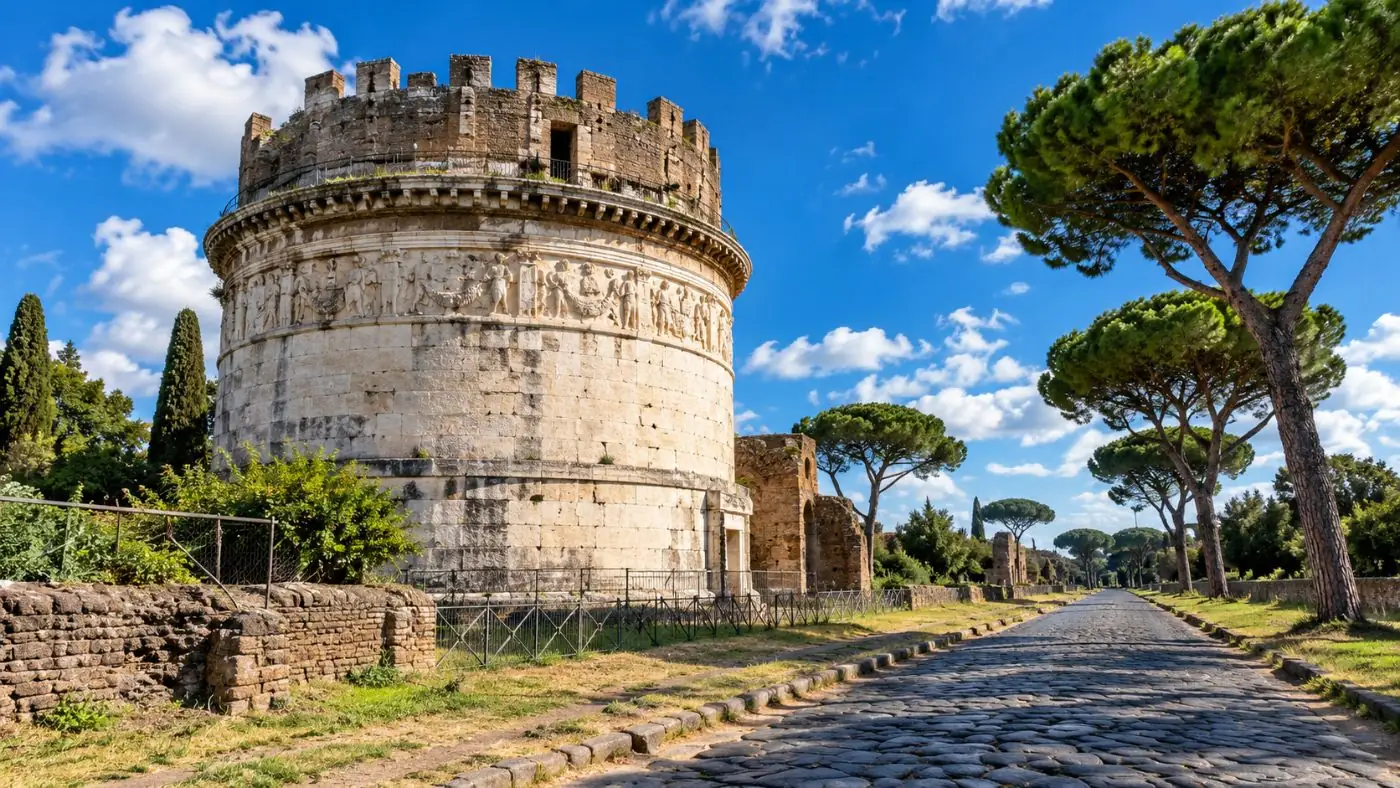
Our booking recommendation: The e-bike tour of the Appian Way and the Aqueducts, with free cancellation up to 24 hours before. Book this Compare options
The best way to explore the Appian Way is to follow it from north to south, starting from Porta San Sebastiano: the main stops appear in sequence and the landscape becomes increasingly open. The aqueducts are the main detour, as they lie to the east of the road.
You don’t need to see everything. Choose one catacomb, one or two monuments and a stretch of Roman basalt paving stones, and leave time for the road itself.
The short answer
Along the Appian Way you can see Porta San Sebastiano with the Museum of the Walls, the Quo Vadis church, the San Callisto and San Sebastiano catacombs, Massenzio’s Villa, the Mausoleum of Cecilia Metella with the Castrum Caetani, Capo di Bove, the basoli with tombs and the Villa dei Quintili. Walking along the road is free; some monuments and the catacombs charge admission. The sites in the Archaeological Park are free on the first Sunday of the month. Half a day is enough for the main points, a full day to see them at a leisurely pace.
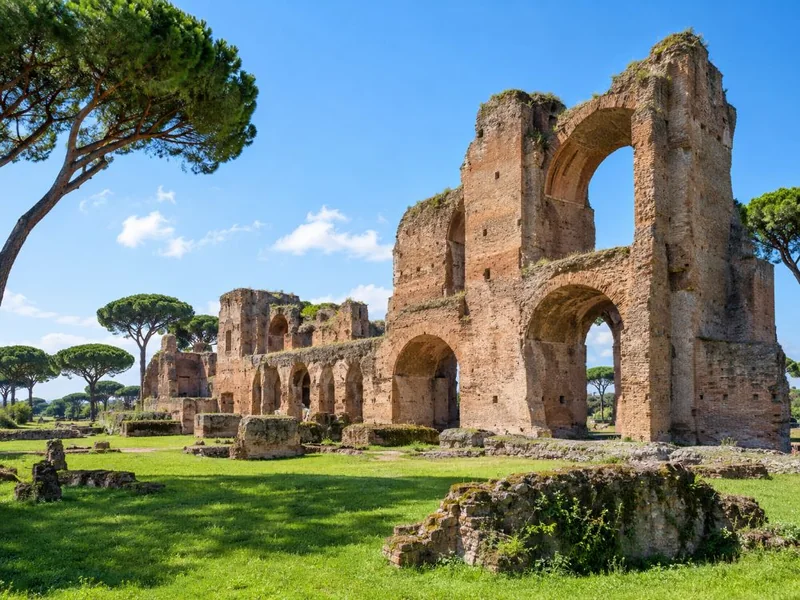
What to see on the Appian Way?
The main stops, from north to south, are Porta San Sebastiano, Quo Vadis, the catacombs, Massenzio’s Villa, Cecilia Metella, Capo di Bove, the stretch of basoli and Villa dei Quintili. To the east, off the road, lies Parco degli Acquedotti.
- Porta San Sebastiano and Museo delle Mura: the ancient Porta Appia, where the road exits the Aurelian Walls.
- Domine Quo Vadis: the church at the crossroads with Via Ardeatina, linked to the legend of Peter.
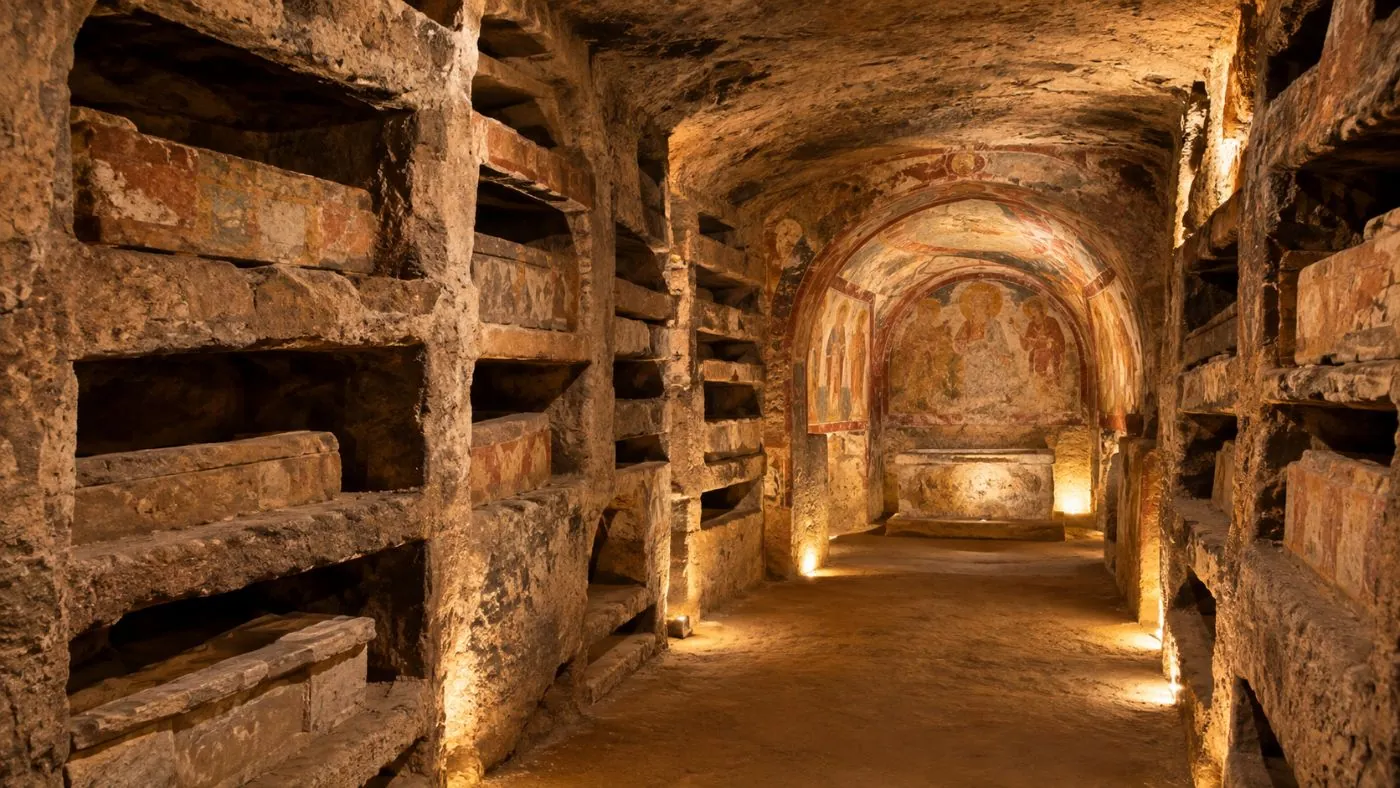
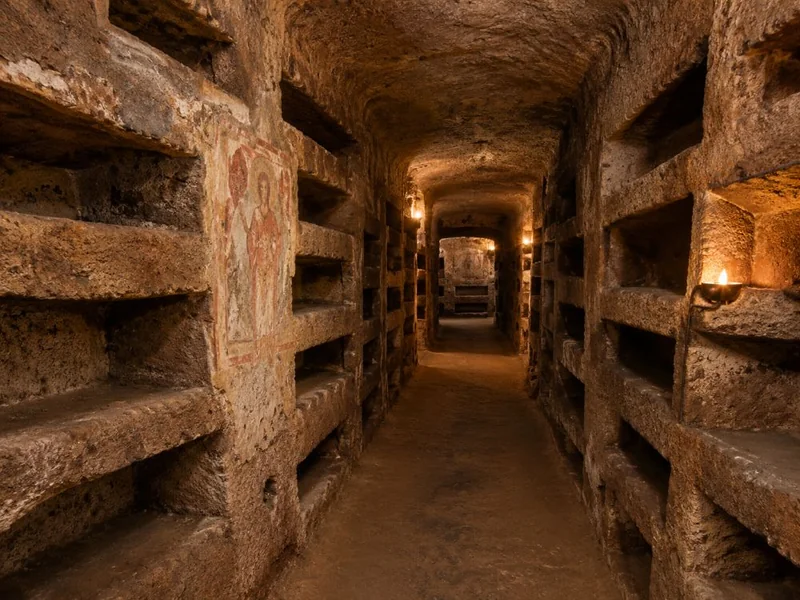
- San Callisto and San Sebastiano Catacombs: guided visits only, at numbers 110 and 136 on the road.
- Villa of Maxentius: the imperial residence from the early 4th century, with the circus.
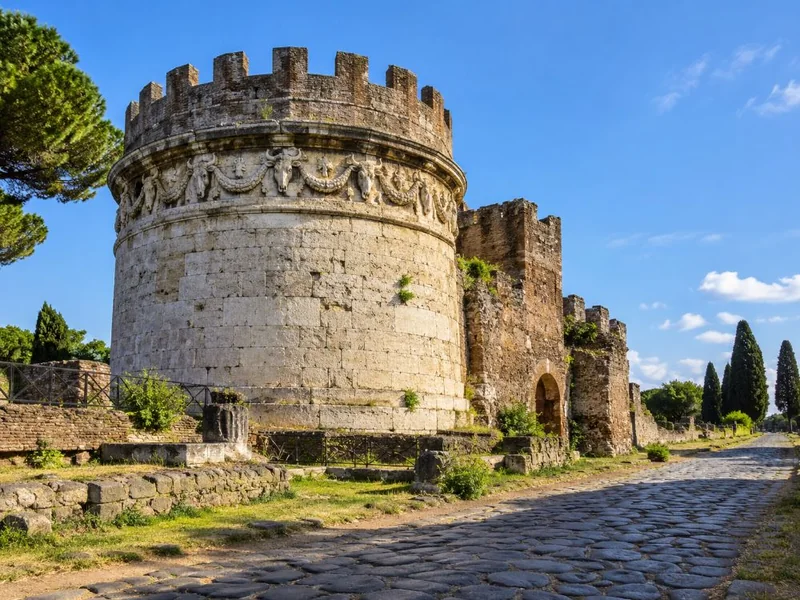
- Cecilia Metella Mausoleum and Castrum Caetani: the 1st-century BC tomb incorporated into the medieval castle.
- Capo di Bove: an archaeological site in the Appian Way Park just after Cecilia Metella.
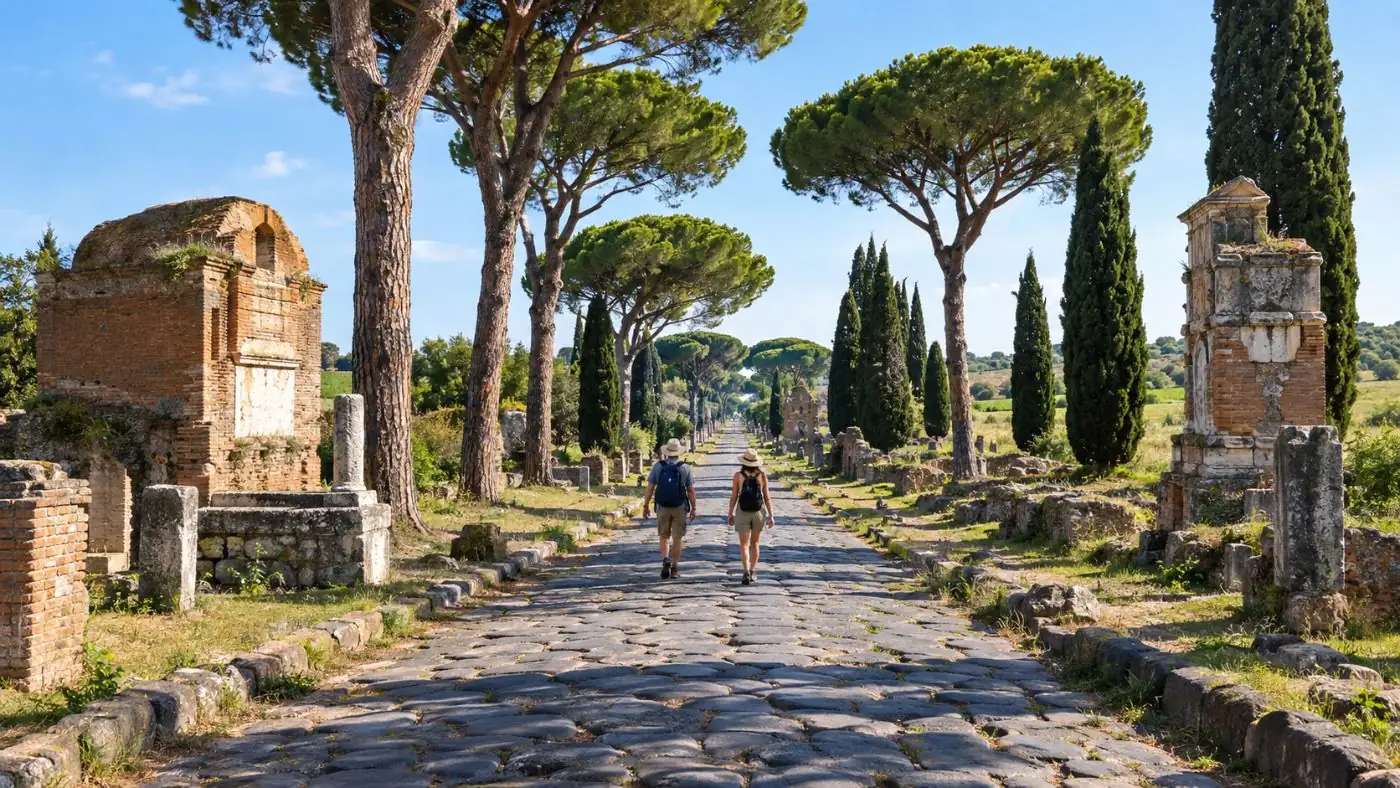
- Roman basalt paving stones and tombs: the most evocative stretch, with the ruts from cart wheels.
- Villa dei Quintili: the large villa confiscated by Commodus.
Is the Appian Way free?
Yes, the road and the open stretches are free. Some monuments charge admission, such as Cecilia Metella, Capo di Bove and Villa dei Quintili, as do all three major catacombs.
The sites of the Appian Way Archaeological Park, a state body under the Ministry of Culture, can be booked on portale.museiitaliani.it. They are free on the first Sunday of the month with the "Sunday at the Museum" initiative, and admission is free for under-18s according to the rules of state sites. The catacombs have their own tickets: check the conditions on their official websites.
The opening hours of the Park's sites change with the seasons. Entry closes 30 minutes before closing time, and at Villa dei Quintili one hour before. The sites are usually closed one day a week: check the day on the Park's website before you go, or call 06 477881.
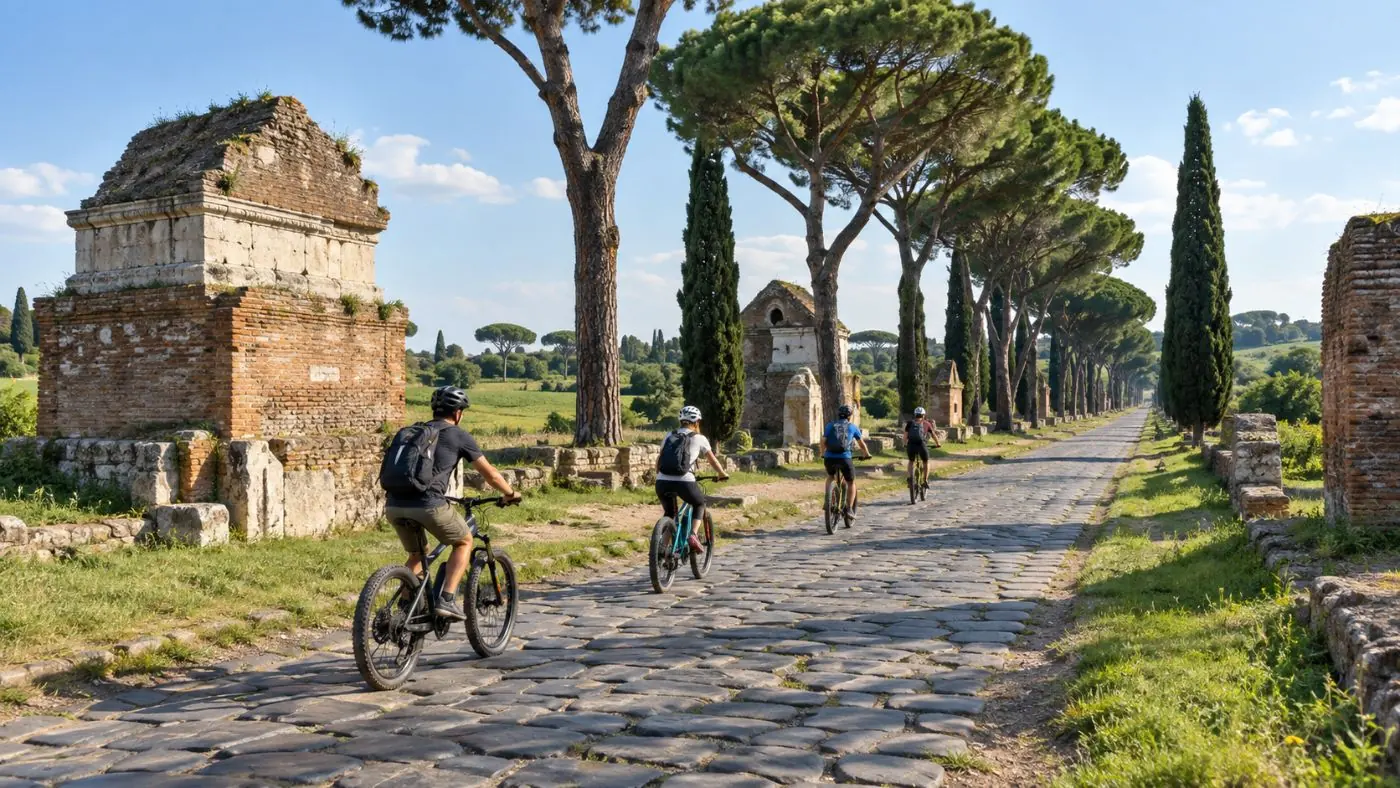
On an e-bike, you can see Maxentius, Cecilia Metella and the aqueducts in half a day, with a catacomb included if you choose the option.
Book thisWhat is there to see along the Via Appia, site by site?
The table summarises each stop with the type of entry and the time we recommend you spend there.
The times are indicative and designed for a leisurely visit; for the catacombs, they correspond to the duration of the guided tour.
| Place | Entry | Location | Recommended time |
|---|---|---|---|
| Porta San Sebastiano and Museum of the Walls | Check the museum website | Start of the Appian Way, in the Aurelian Walls | 30-45 minutes |
| Domine Quo Vadis | Church, check opening times | Junction with Via Ardeatina | 10-15 minutes |
| San Callisto Catacombs | Paid entry, guided tour only | Appian Way 110 | About 40 minutes for the visit |
| San Sebastiano Catacombs | Paid entry, guided tour only | Via Appia Antica 136 | About 40 minutes for the visit |
| Villa and Circus of Maxentius | Check before visiting | Along the Appian Way, after the catacombs | 30-45 minutes |
| Cecilia Metella and Castrum Caetani | Paid entry, free on the first Sunday | Along the Appian Way, where the Roman basalt paving stones begin | About 1 hour |
| Capo di Bove | Paid entry, free on the first Sunday | Right after Cecilia Metella | 30 minutes |
| Roman basalt paving stones and tombs | Free | South of Capo di Bove | 1-2 hours on foot |
| Villa dei Quintili | Paid entry, free on the first Sunday | Further south along the road | About 1 hour |
| Parco degli Acquedotti | Free | East of the Appian Way, metro A | 1 hour |
What to see at the start of the Appian Way?
Porta San Sebastiano with the Museum of the Walls, the Church of Domine Quo Vadis and the catacombs of San Callisto and San Sebastiano, all within the first few kilometres.
This stretch is the densest in monuments but also the busiest on weekdays; on weekends, with the experimental limited traffic zone from 7 am to 7 pm (except in August), there are fewer cars. It is the ideal stretch if you have little time and want to visit a catacomb: San Callisto is closed on Wednesdays, San Sebastiano on Mondays.
Details on opening times and closures are in the guide to the catacombs of the Appian Way.
What to see between Massenzio and Cecilia Metella?
Villa di Massenzio with its circus, then the Mausoleum of Cecilia Metella with the Caetani castle and the Capo di Bove site.
The villa that Emperor Maxentius had built at the beginning of the 4th century AD includes a circus for chariot races, of which large brick structures remain. A little further on stands the Mausoleum of Cecilia Metella, the circular tomb from the 1st century BC that the Caetani transformed into a fortress in the 14th century.
From here onwards the road changes character: take bus 660 from metro A Colli Albani if you want to start directly from this point.
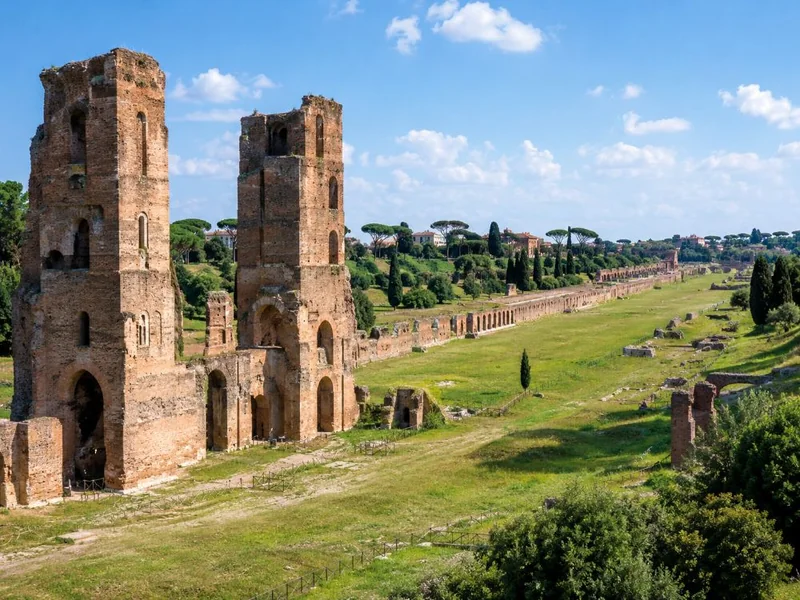
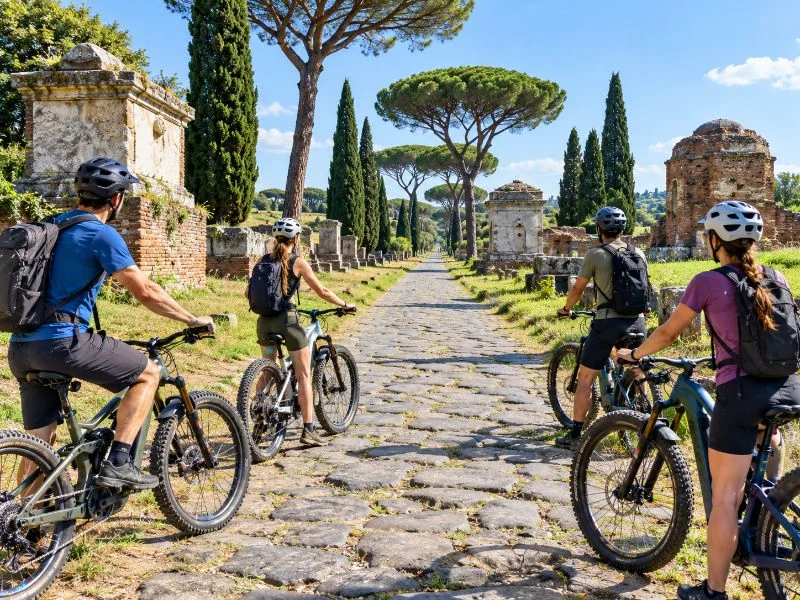
Villa di Massenzio, Cecilia Metella and Parco degli Acquedotti by dual-suspension e-bike, with a guide also in Italian.
Book thisWhat to see in the southernmost stretch?
The original Roman basalt paving stones with chariot grooves, the tombs along the sides of the road and the Villa dei Quintili, the large villa of the Quintili brothers confiscated by Commodus.
South of Capo di Bove, the Appian Way becomes the one from postcards: pines, cypresses, fragments of funerary monuments and the basalt road running straight towards the Colli Albani. It is the best stretch to walk or cycle, as we explain in the guide to walking the Appian Way.
Villa dei Quintili belonged to the brothers Quintilius Condianus and Quintilius Maximus, who were put to death by Commodus in the 2nd century AD, who then took the villa. The last entry is one hour before closing.
How much time do you need to visit the Appian Way?
Half a day for the main points with a means of transport, such as a bike or a tour; a full day if you walk and want to enter the paid sites.
Half day: an e-bike or minibus tour takes you among the monuments without wasting time on transfers. The e-bike tour with catacombs and food lasts 3.5-5 hours depending on the option and includes Maxentius, Cecilia Metella and the aqueducts.
Full day: on foot, with a catacomb, Cecilia Metella and Villa dei Quintili, or by rental bike with long stops. The one-day rental at Via Appia Antica 60 lets you freely choose your itinerary. Those who are fit can push as far as the Castelli Romani with the e-bike tour to Castel Gandolfo, lasting 6 hours.
A day by bike your way: e-bike, mountain bike or city bike with helmet and lock, pickup at Via Appia Antica 60.
Book thisIs it worth going beyond the Appian Way to the Castelli Romani?
Yes, if you are trained cyclists: the e-bike tour to Castel Gandolfo follows the historic Appian Way for much of the route and reaches Lake Albano, with time for lunch.
The tour starts at Via Appia Antica 136, in front of the San Sebastiano catacomb, lasts 6 hours and is held in Italian or English, with a maximum of 8 people per guide. It is for those aged 16 to 79 and weighing up to 95 kg, and includes a riding test before departure.
Lunch, return train and monument entries are not included. Part of the route takes place on roads open to traffic.
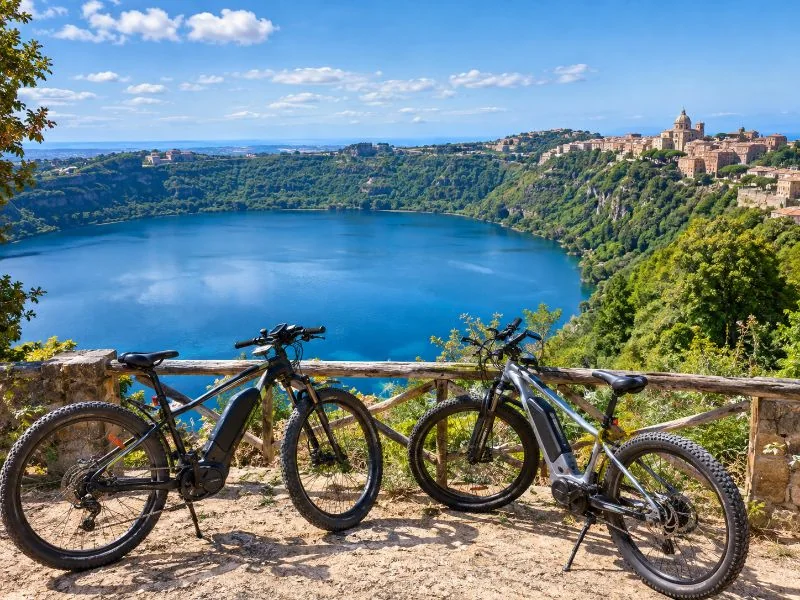
From the Appian Way to Lake Albano by e-bike: Roman road, Castelli Romani and lunch in Castel Gandolfo in one day.
Book thisFrequently asked questions
What is the most famous monument on the Appian Way?
The Mausoleum of Cecilia Metella, the large circular tomb from the 1st century BC incorporated into the medieval Caetani castle.
When is the Appian Way free?
The road is free. The sites of the Archaeological Park, such as Cecilia Metella and Villa dei Quintili, are free on the first Sunday of the month and for under 18s.
What is the best day to visit the Appian Way?
There is no single best day. On Saturdays and Sundays, with the experimental limited traffic zone from 7 am to 7 pm, fewer cars circulate on the first stretch. Check the closing days of the catacombs and the Park sites.
Is Parco degli Acquedotti on the Appian Way?
No, it is located east of the road and is part of the Appia Antica Regional Park. It can be reached by metro line A, stops Giulio Agricola or Subaugusta.
Ready to book
Choose your tour
Bookable on GetYourGuide, with free cancellation up to 24 hours before.
Appian Way and Aqueducts by e-bike
- Full-suspension electric e-bike, suitable for the uneven surface of the Roman basalt paving stones
- Multilingual guide: Italian, English, French or Spanish
- Villa of Maxentius and Mausoleum of Cecilia Metella along the route, then the Parco degli Acquedotti
By e-bike from the Appian Way to Castel Gandolfo
The full day: by e-bike along the Appian Way towards the Castelli Romani, up to the crater of Lake Albano and Castel Gandolfo, with time for lunch (not included). According to the offer, about three-fifths of the route is on the historic Appian Way, the rest on roads open to traffic, with a riding test before departure.
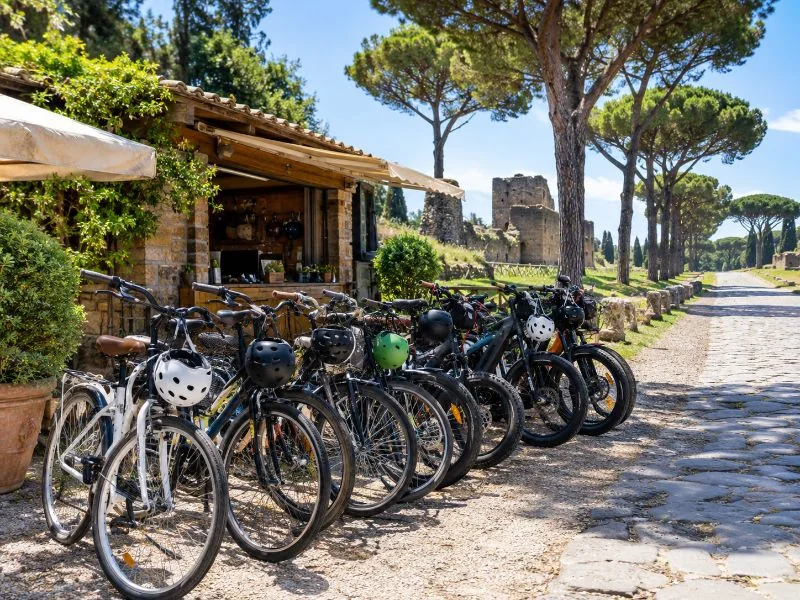
Bike rental for a day on the Appian Way
Bike, helmet and lock at the rental point on the Appian Way; you choose the itinerary, among catacombs, villas and tombs